
Nordic Semi debuts low-power nRF93M1 Cat 1 bis module at MWC 2026

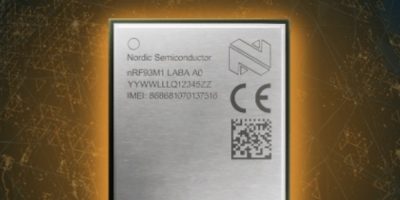
Nordic Semiconductor is demoing the nRF93M1 module with LTE Cat 1 bis connectivity and its associated development kit at MWC 2026. This will be part of Nordic’s suite of additions to its future-ready cellular IoT portfolio.

“nRF93M1 delivers what customers have been asking for – a high‑quality, low-power Cat 1 bis module that’s smaller, easier to integrate, and built for the cloud from day one,” says Oyvind Birkenes, EVP Long-Range at Nordic Semiconductor. “It brings more performance with less complexity, giving developers a powerful, future‑ready platform.”

Bringing LTE Cat 1 bis connectivity to Nordic’s long-range portfolio, the nRF93M1 offers fully compatible regional and global module options for widespread, reliable, scalable IoT deployments. With the nRF54L host MCU reference design, evaluation kit, and open documentation, companies get a much faster development cycle, including quick bring-up, easier integration, and fewer technical barriers when moving from prototype to product. Ultra-low-power features ensure that battery-powered devices operate for years in the field, while standardised, Nordic-optimised interfaces and peripherals make it easy to slot the nRF93M1 into new and existing system designs.

The nRF93M1 is built for flexibility, supporting Wi Fi and cellular eCID location, multiple embedded peripherals, coexistence control, and multiple SIM options, including IoT eSIM (SGP.32) remote provisioning support and low-power SoftSIM. Global and regional regulatory and mobile operator certifications are ongoing to ensure compliance and accelerate time-to-market for customers.

“The nRF93M1 delivers reliable 4G performance with lower device complexity, broad coverage, and power-efficient operation – key advantages for scalable IoT deployments,” says Kristian Sæther, Senior Product Director Long-Range at Nordic Semiconductor. “Combining Nordic’s ease of use with Cat 1 bis connectivity empowers companies to build high‑performing devices today, while we continue to develop a further optimised eRedCap solution as the 5G ecosystem matures.”

The nRF93M1 DK provides a complete out-of-the-box experience for rapid evaluation and prototyping with the nRF93M1 module, the nRF54L host MCU reference design, and the pre-provisioned nRF Cloud services support.

The nRF93M1 will ship with nRF Cloud’s power-optimised cellular and Wi-Fi location services, embedded observability, and firmware OTA capabilities, all built into the modem. It can be activated on the modem via simple AT commands and extended to a Nordic host MCU via integration with the nRF Connect SDK. This combination of production-ready services means easier product development, lower-risk product launches, simpler in-field maintenance, and streamlined scale up.

Together, the nRF93M1, its development kit, and nRF Cloud deliver a low-power, developer-friendly platform for building more data-intensive cellular IoT products.

nordicsemi.com

> Read More

Aria Sensing and Algorized unveil a breakthrough in AI powered UWB radar

Aria Sensing and Algorized have announced a strategic collaboration that redefines what Ultra-Wideband technology can achieve. By combining 3D UWB radar System-on-Chip with Algorized’s Edge-Native Nervous System, the companies have introduced a powerful AI-based UWB sensing platform, starting with a next-generation Automotive Child Presence Detection (CPD) system unveiled at Mobile World Congress 2026.

While most UWB chips on the market were originally designed for secure ranging, Aria Sensing’s hydrogen 4×4 UWB Radar SoC was engineered from the ground up for radar performance.

“Traditional UWB solutions were never optimised for high-resolution radar sensing,” said Alessio Ciaccatori, CEO of Aria Sensing. “Hydrogen changes the paradigm. Combined with Algorized’s real-time edge-AI engine, we are delivering a sensing platform that dramatically outperforms conventional UWB and mmWave solutions in sensitivity, angular resolution, power efficiency, and real-world robustness.”

At the core of the breakthrough is Hydrogen, the world’s first UWB radar SoC featuring:
• True 3D detection
• Integrated digital beamforming (~5° angular resolution)
• Up to 1.8 GHz programmable bandwidth
• Ultra-low power radar architecture

The result: high-resolution in-cabin sensing capable of detecting micro-motions, respiratory activity, precise occupancy mapping, behavioural patterns and more — dramatically reduced latency, and at a fraction of the power consumption and cost of legacy radar architectures.

When powered by Algorized’s embedded edge AI foundation model, the platform delivers:
• AI-powered people counting and tracking
• Micro-motion and baby monitoring
• Behavioural pattern recognition
• Secure positioning and classification
All running directly on a compact, scalable hardware platform ready for mass deployment.

First Application: Next-Generation Child Presence Detection
The collaboration debuts with an advanced Automotive Child Presence Detection (CPD) in-cabin solution, designed for OEM and Tier-1 integration and aligned with emerging global safety regulations.

Beyond Automotive: A New Standard for Human-Centric Radar
The joint platform extends far beyond CPD. Aria Sensing and Algorized are enabling a new class of intelligent sensing devices for:
• Smart buildings
• Consumer electronics
• HVAC and appliances
• Industrial safety systems
• Elderly monitoring

From ceiling-mounted building sensors to embedded smart devices, the companies provide turnkey demonstrators and a fully integrated IC + AI software stack designed for rapid scaling into high-volume production.

“Aria Sensing’s mission is to provide world’s best UWB single-chip radar devices,” said Alessio Cacciatori, CEO of Aria Sensing. “Joining advanced Edge-AI features extraction with low-power, high-resolution single-chip radar devices truly enables a paradigm shift in how appliances, home, cars, and robots interact with persons.”

“Algorized’s mission is to give machines human-level environmental awareness,” said Natalya Lopareva, CEO of Algorized. “By combining AI with a purpose-built 3D UWB radar architecture, we are unlocking capabilities that were simply not possible with legacy silicon.”

Hydrogen will be demonstrated at MWC Barcelona (March 2–5, 2026) on Aria Sensing booth, Hall 7, Booth 7D71, Stand 26, and specific CPD Evaluation kits are available for customer evaluation.

ariasensing.com

algorized.com

> Read More

ST’ hybrid controller simplifies full-feature implementation of USB-C sink premium applications

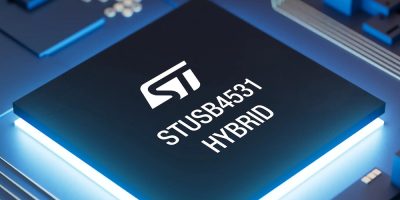
STMicroelectronics’ STUSB4531 USB Power Delivery (PD) sink controller introduces a new, patented hybrid mode that simplifies implementing optional USB PD features for added value in USB-powered and USB-chargeable devices.

The STUSB4531 contains a certified, hardwired USB PD stack that works with ST-proprietary AUTORUN algorithms to enable software-free power negotiation, supervision, and management. These AUTORUN algorithms simplify developing battery-charging and VBUS-powered electronics in equipment such as portable audio devices, wearables, set-top boxes, Wi-Fi access points, healthcare devices, and lighting. The latest updated algorithms can negotiate with AC adapters to ensure the optimum power profile, including adjustable voltage supply (AVS) and high-power charging in dead-battery mode for faster device reactivation.

The new hybrid mode now added to the STUSB4531 lets an external application processor interact with the stack to leverage the protocol layers for USB PD communication. This gives engineers extra flexibility to implement functions such as battery messaging, data role swapping, Alternate modes, and vendor-defined messages (VDM) while also easing software development and accelerating time to market.

Typical applications for charging with USB data include hard disk drives, point-of-sale (POS) terminals, printers, drones, and portable industrial devices. While VR headsets, infotainment devices, portable displays, and gaming consoles often combine USB power with Alternate modes for DisplayPort or Thunderbolt protocols, VDM enhances consumer accessories and medical devices.

By combining hardwired speed and simplicity with software-enabled flexibility, the STUSB4531 facilitates adoption of USB-C for charging and powering devices, mandated by ecodesign norms worldwide conceived to reduce electronic waste. The IC is certified according to the latest USB-C® 2.4 and USB PD 3.2 standards, as well as IEC 62680 confirming EU-conformity.

An extensive ecosystem supports developers using the STUSB4531, including an evaluation board (EVAL-SCS007V1), certified minimalistic reference design (EVAL-SCS006V1), graphical user interface (STSW-STUSB020), and NVM flasher (STSW-STUSB021). An open-source software library (STSW-STUSB022) will be available soon.

www.st.com

> Read More

Rutronik expands its storage portfolio with KIOXIA e-MMCs for industrial and consumer applications

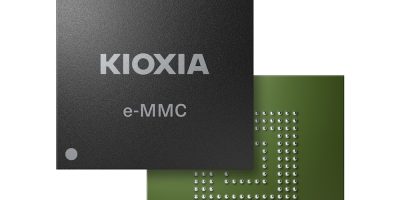
With KIOXIA’s e-MMC memory solutions, Rutronik offers compact and powerful embedded components based on the BiCS FLASHTM generation 5 TLC 3D flash memory. The e-MMCs are available in 64 GB (THGAMSG9T15BAIL_TRAY / THGAMSG9T15BAIL_REEL) and 128 GB (THGAMST0T25BAIL_TRAY / THGAMST0T25BAIL_REEL) and support the JEDEC e-MMC 5.1 protocol, operate with an I / O voltage of 1.8 V and achieve transfer rates of up to 340 MB / s (read) and 230 MB/s (write) in HS400 mode. The memory solutions are specified for a wide temperature range from -25 °C to +85 °C.

The KIOXIA e-MMC series combines state-of-the-art BiCS FLASHTM TLC 3D flash memory technology with an integrated controller and multi-chip architecture (MCP), enabling high data density with low power consumption. The modules are housed in a compact 153-ball BGA package (11.5 mm × 13 mm, 0.8 mm high) and offer full compatibility with existing host systems via the standardised MMC Version 5.1 interface (1-, 4- or 8-bit I / O).

With a read speed of 340 MB / s and a write speed of 230 MB / s in HS400 mode, the e-MMCs deliver significantly improved performance compared to the fourth generation – with stable operating characteristics even under load and at high temperatures.

Benefits at a glance:
BiCS FLASHTM generation 5 TLC 3D flash memory
JEDEC e-MMC 5.1 standard for broad compatibility
High performance: up to 340 MB/s read / 230 MB/s write
Extended temperature range (-25 °C to +85 °C)
Integrated controller with ECC and wear levelling
Low energy consumption thanks to 1.8 V I / O voltage
Stable performance during continuous operation and temperature changes
Long-term availability and quality manufacturing from KIOXIA

Application examples:
Industrial automation and control systems
HMI and edge devices
Smart home and IoT applications
Digital cameras, wearables and portable devices

rutronik24.com

> Read More

About Smart Cities

This news story is brought to you by smartcitieselectronics.com, the specialist site dedicated to delivering information about what’s new in the Smart City Electronics industry, with daily news updates, new products and industry news. To stay up-to-date, register to receive our weekly newsletters and keep yourself informed on the latest technology news and new products from around the globe. Simply click this link to register here: Smart Cities Registration