

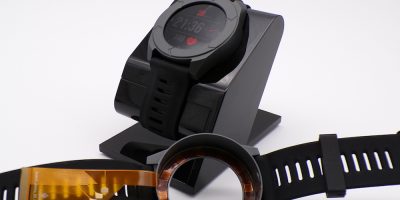
Nanomade announces technology that turns any surface into a force & touch interface

At Touch Taiwan 2026 Nanomade will demonstrate a patented sensor technology that transforms metal, glass, plastic, and other everyday surfaces into interactive force & touch intNerfaces. At the show, Nanomade will run live demos on laptops, wearables, headphones, and consumer electronics.

The technology is based on quantum tunnelling, using a proprietary nanoparticle ink on flexible substrates to detect micro-scale surface deformations with high precision. In internal benchmarks, according to Nanomade their sensors are 75 times more sensitive than standard strain gauges.

Standard capacitive touch detects contact but not pressure. Nanomade’s sensors detect both, allowing products to distinguish between light contact and deliberate press across metal, glass, plastic, wood, textile, and carbon fibre. Nanomade has patented this combination of capacitive and force sensing on a single sensor under the brand Capaforce.

The sensor stack is ultra-thin and flexible, laminated onto existing assemblies without structural redesign, and reduces false activation compared to standard capacitive solutions. Because force detection does not rely on skin conductivity, the sensors also operate reliably with gloves and in humid or wet conditions.

Nanomade’s design office spans chemistry, materials physics, electronics, software, and signal processing. The team works directly with OEMs, ODMs, and brands from initial sensor evaluation through proof-of-concept development to manufacturing, built to industrial quality standards.

www.nanomade.com

> Read More

Mouser explores how AI shapes everyday technologies and experiences

Mouser has announced the first 2026 instalment of its Empowering Innovation Together (EIT) technology series, Engineering AI for Daily Life. This instalment explores how artificial intelligence is increasingly embedded in everyday products and services, from assisted search and messaging tools to healthcare wearables that monitor personal well-being. As AI capabilities expand across consumer and connected devices, engineers continue to design systems that make these technologies more useful, intuitive, and trustworthy in real-world applications.

“AI is quickly moving from experimental technology into products people rely on every day, and engineers play a major role in shaping how it’s applied,” said Jeff Newell, President of Mouser Electronics. “As AI becomes embedded across consumer devices and connected systems, it’s important that these technologies are designed to support human expertise while remaining reliable and trustworthy. This EIT segment helps engineers explore the tools and insights they need to build the next generation of AI-enabled solutions.”

As AI agents and intelligent tools become integrated into homes, connected devices, and digital services, engineers are developing systems that enhance user judgment and keep users in control while maintaining transparency and privacy. New AI-powered platforms already demonstrate this potential – turning simple conversations into complete travel itineraries or providing deeper health insights through connected devices.

On The Tech Between Us podcast, Raymond Yin, Director of Technical Content at Mouser Electronics, and Dr. Marisa Tschopp, Senior Researcher at scip AG in Zurich, examine the new role of AI in human interaction and day-to-day experiences. They explore how AI advancements shape technology-enabled collaboration, including the long-term impact of daily integration and applications for mental health.

“AI is moving beyond experimental settings into the products people rely on every day,” said Yin. “Our first EIT navigates the next era in AI innovation, looking at how to use the technology to enhance people’s abilities and rethink how we can live for the better.”

In addition to the podcast, the EIT series includes an in-depth video, technical articles, a topic-related infographic, as well as subscriber-exclusive content, diving into everyday AI. By examining the range of cases where AI can level up technical expertise, engineers can build a class of tools to help reshape how people think, decide, and create while protecting privacy and control.

mouser.com/empowering-innovation

> Read More

Wireless modules for embedded systems now available from Tria Technologies

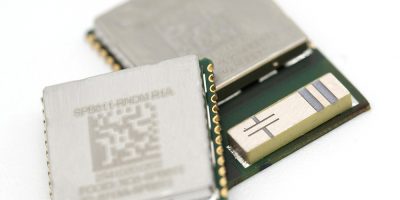
Tria Technologies, an Avnet company has announced the availability of two new wireless modules, the SPB611 and SPB209. These modules support multiple short-range protocols and help speed the development of wireless-enabled embedded systems.

The SPB611 supports Wi-Fi 6 (802.11ax 80 MHz) dual-band and Bluetooth 5.2, while the SPB209 offers Wi-Fi 5 (802.11ac) and Bluetooth 4.2. The SPB611 (Wi-Fi 6) module also offers a tri-radio option to add 802.15.4-2020 (Thread and ZigBee) mesh networking capabilities. Both modules can be supplied with an LTE filter and PCB antenna to reduce system size.

These 3.3V modules are supplied in a compact 14 x 14 mm (196 mm2) 41-pin form factor. A 4-bit SDIO 3.0 and HS-UART provide the external interface for WLAN and Bluetooth data respectively, supported by extensive DMA hardware to minimise the processing load on the host CPU. Sleep and standby modes enhance the low power design, and the broad temperature operating range of -40 to +85°C makes the modules ideal for a wide range of industrial applications.

Both modules were previously available in custom Tria System Solutions and pre-integrated on Tria SMARC compute modules. Now they are also offered as stand-alone products under the Tria brand, providing engineers complete flexibility to meet wireless connectivity needs using SMARC compute modules, custom Tria system or by deploying the modules as stand-alone devices on their own hardware or custom carrier board.

“As the only leading embedded compute board manufacturer that also designs and manufactures wireless modules, we are uniquely positioned to provide unified software and support for both compute and RF components,” said Thomas Staudinger, President of Tria. “The benefits to customers of buying from a single supplier include simplified software upgrades, ensured software compatibility and direct support to help engineers comply with security requirements such as the RED DA and the Cyber Resilience Act (CRA). Working with Tria also ensures that the wireless module lifecycle will match the compute module, eliminating the expense of wireless modules reaching end of life before the compute board.”

The modules also benefit from Tria bringing over 10 years of experience in integrating RF connectivity for embedded compute. They are pre-certified, fast-tracking time to market and reducing certification costs. A BlueZ software stack qualification avoids test effort and ensures full compliance, facilitating a much faster and cost-effective listing and logo license.

tria-technologies.com

> Read More

Mouser sponsors 2026 Global “Create the Future” design contest

Mouser has announced that it is once again a Platinum sponsor of the Create the Future Design Contest. Create the Future is a global challenge for engineers and innovators to design the next great thing, with a chance to win the grand prize. Mouser, which has sponsored the contest for over a decade, is joined again by valued manufacturers Intel and Analog Devices, as co-sponsors. The competition is produced by SAE Media Group, an SAE International Company, and Tech Briefs magazine. COMSOL is also a principal sponsor of the contest.

The contest opened for entries on March 2 and closes on July 1, 2026. The grand prize winner receives worldwide recognition and a $25,000 cash prize for an innovative product that benefits society and the economy. Previous contests have produced more than 16,000 design ideas from engineers, entrepreneurs, and students in more than 100 countries.

The Create the Future Design Contest highlights product designs that enhance humanity, improve healthcare quality, or help provide sustainable solutions. Previous grand prize-winning entries include self-destructing plastics, a self-contained organ and limb transport device, and an economical, rapid screening device to prevent food-borne illness.

The contest was created in 2002 by the publishers of Tech Briefs magazine to help stimulate and reward engineering innovation. The grand prize winner will be chosen from the winners in seven entry categories: Aerospace and Defence, Automotive/Transportation, Electronics, Energy, Power and Propulsion, Manufacturing and Materials, Medical, and Robotics and Automation.

mouser.com

> Read More

About Smart Cities

This news story is brought to you by smartcitieselectronics.com, the specialist site dedicated to delivering information about what’s new in the Smart City Electronics industry, with daily news updates, new products and industry news. To stay up-to-date, register to receive our weekly newsletters and keep yourself informed on the latest technology news and new products from around the globe. Simply click this link to register here: Smart Cities Registration