

Murata’s D-Band antenna module targets future 6G systems
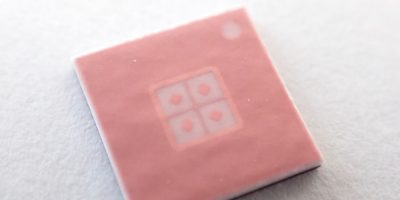
Murata has developed a D-band antenna module for future 6G wireless systems through joint research combining its low-temperature co-fired ceramic (LTCC) substrate and packaging technologies with a beamforming integrated circuit (IC).
The module has demonstrated wireless communication at 135 GHz, signal transmission using bandwidths of up to 8 GHz, and two-dimensional beam control for both transmission and reception. Operating in the D-band, which spans 110–170 GHz, the technology is being developed to support the high data rates and capacity requirements of future wireless communications.
D-band technology for future 6G communications
The growth of physical AI, digital twins and other applications that collect, analyse and act on real-world data in real time is increasing demand for high-capacity, low-latency communications. Wider bandwidths can support higher data rates, but securing additional spectrum within existing mobile frequency bands is challenging because these bands are shared with other wireless services.
Frequencies above 100 GHz are therefore being investigated for future 6G systems, offering the potential to use bandwidths spanning several gigahertz. However, designing hardware at these frequencies presents significant integration challenges. As wavelengths become shorter, small differences in wiring length and component placement can affect signal performance, making precise antenna design, packaging and assembly essential.
Combining LTCC substrates with beamforming technology
Murata has combined its LTCC substrate technology with a D-band-compatible beamforming IC developed by imec. The module integrates antennas and the high-frequency circuitry required to transmit, receive and steer wireless signals.
According to Murata, the result is the world’s first LTCC antenna module to support D-band operation and two-dimensional beam control for both transmission and reception. The beamforming IC controls signals across multiple antennas, allowing the radio beam to be directed horizontally and vertically towards the intended device.
Murata has optimised its in-house ceramic materials for the application, using a low dielectric constant and low dielectric loss to help reduce signal losses at frequencies above 100 GHz. Its high-frequency design and packaging expertise also enables the precise, high-density integration of the IC, antennas and radio-frequency interconnects within a compact module designed for mounting in electronic equipment.