

MEASURING THE IMPACT OF 5G

How Electronic Test and Measurement (ETM) Manufacturers Can Prepare for and Benefit from 5G

5G Is Coming

For many, that short statement is both a beacon of hope and a source of trepidation. This is especially true for test equipment manufacturers. While 5G offers the opportunity for healthy growth, there are several factors that will make reaping benefits from this generation of wireless broadband technology more challenging than it was for its predecessors.

Let’s start with the current situation for electronic test and measurement (ETM) manufacturers. What generates growth in the wireless ETM business is the combination of new handset models, an increasing volume of annual handset shipments, and wireless technology advancements that drive new infrastructure equipment. We have seen a reduction in the growth rate of handset shipments, as annual shipment volumes have started to exceed 1 billion units. At the same time, mergers and acquisitions in the wireless infrastructure industry have reduced the number of customers in that segment. Finally, ETM manufacturers have also been coping with delays in the deployment of LTE-advanced carrier aggregation in major markets. The result is a slowing market for LTE R&D and production test equipment, as the industry awaits the technology shift to 5G.
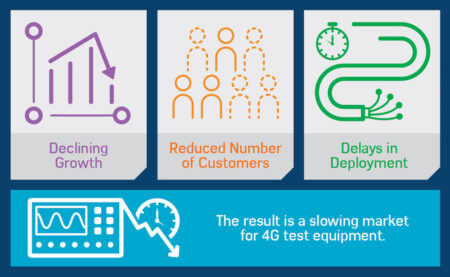
A slowing market for LTE test equipment has manufacturers eagerly awaiting the acceleration of 5G.

5G Is Coming—with Challenges

As wireless broadband technology has evolved from generation to generation—and especially from feature to feature—ETM manufacturers have often been able to rely on software upgrades to adapt to changes. The move to 5G, however, is seen as a giant stride forward that will require new and far more complex solutions.

Behind the faster speed, reduced latency, increased capacity, and improved reliability of 5G are new and less familiar technologies, such as millimeter wave, massive MIMO, and adaptive beamforming—all of which will demand significantly more advanced base stations and customer devices. The most substantial change to the 5G physical layer is the option for millimeter wave transmission coupled with adaptive beamforming requiring a large number of antenna elements. While millimeter wave transmission is a familiar technology for point-to-point, line-of-sight wireless backhaul, using those frequencies in a cellular topology, where each cell serves hundreds or thousands of mobile users, and where many antennas will be integrated into advanced device packaging, is challenging and uncharted territory. In order to research, develop, and test the new technologies behind 5G, ETM equipment will have to deliver far more advanced capabilities than previous generations of equipment. The ETM challenge is made more difficult by the fact that the 5G standards have not yet been finalized. And, like previous generations of wireless technology, there is the very strong desire by operators to be first with deployed networks, intensifying the need for ETM equipment early in the technology lifecycle.

Normally, this list of challenges would excite and energize an R&D group. However, the slackening growth in LTE ETM equipment has left some manufacturers with far fewer resources to devote to 5G innovation and development.

A Peek Behind the Curtain

If you want to go fast, go alone. If you want to go far, go together. While 5G introduces significant hurdles, they’re not insurmountable, especially if you subscribe to the wisdom of the African proverb above. New levels of cooperation can be seen throughout the wireless industry. Instrumentation, wireless infrastructure, semiconductor, and software organizations are working together with standards bodies, research organizations, and government regulators worldwide to ensure that 5G is a unified standard addressing the many challenging performance goals, including unprecedented speed, connection density, and ubiquity. Association with important wireless industry organizations such as ITU and 3GPP, and collaboration with any of the multitude of important research organizations, such as NIST and any of the numerous 5G research alliances, is a first step toward greater understanding of the 5G technology trajectory. In addition, ETM manufacturers appear to be gaining a better foothold in the 5G market by forming partnerships and alliances with suppliers.

Moving supplier relationships from highly transactional to being more collaborative can bring greater effectiveness to ETM manufacturers. Knowledge sharing and close collaboration with private companies, including operators and suppliers, is essential to timely delivery of new test products with features that are best aligned with early market needs. Nondisclosure agreements and other proprietary arrangements are giving manufacturers early access to new ideas and emerging technologies that are further enabling the technological breakthroughs required to deliver 5G test capabilities.

Component suppliers are providing information to optimize the performance of existing products beyond published data or are going a step further, such as creating part derivatives to meet specific needs. The right partnerships can bolster an ETM organization’s strengths with early access to advanced technology. Further, by transferring design work to experienced suppliers, an ETM manufacturer can free up scarce engineering resources—allowing them to focus on their strength of delivering value-added product features.

Combined, the partnering activities outlined above are helping ETM manufacturers get the solutions they need, accelerating their own schedules, and helping them and their customers succeed.

The Challenge to Develop Ahead of Standards

With the desire to reduce time to market and meet the demands of 5G, ETM manufacturers need to develop equipment prior to standards being finalized. Because 5G standards will remain in flux for the foreseeable future, working with the right supplier is giving manufacturers access to high performance solutions across the entire signal chain, from millimeter wave to bits. In that way, even as the 5G standard changes, there will be no need to scrap the original hardware design.

Integration

ETM manufacturers will face increased demands for greater capabilities and lower costs. As a result, test products for 5G will be far more complex than those of generations before. Looking beyond individual components to chipsets and system solutions is helping manufacturers squeeze more performance out of limited space and lower cost targets—something especially demanded of modular instrumentation. At the same time, this high level of integration, as well as the increased signal chain count required for MIMO and beamforming, is putting even greater demands on power. By working with suppliers, especially those with the broadest portfolio of products, it’s becoming possible to improve engineer components into complete signal chain solutions to meet the demanding performance, power, space, and time-to-market requirements of tomorrow’s instrumentation.

Ready or Not

5G is an evolutionary leap rather than a simple generational step up. While questions still remain about what 5G will be when it arrives, there is no doubt that it’s on the way. Whether 5G becomes an opportunity for ETM manufacturers will depend heavily on whether they are ready when this new technology arrives. Embracing partnerships and alliances with key suppliers will significantly help ETM manufacturers thrive in the coming 5G market.


By Randy Oltman, Systems Applications Manager, Analog Devices

> Read More

Safe for humans, deadly for viruses: UVC LEDs power advanced germicidal technology

The global pandemic has focused attention on dealing with dangerous microorganisms. Viruses, as well as bacteria, have been present in the environment for longer than humans. With our capacity to create technologies, we have developed the ability to protect ourselves from these natural bio-hazards.

Various techniques are in use, including the use of HEPA (High-Efficiency Particulate Air), carbon and ceramic filters, germicidal chemicals, ionisers and plasma systems, and ultraviolet (UV) radiation. As with so many things in life, none of these is a universally perfect solution. All have limitations and some have important drawbacks.

Filters can exclude pathogens and pollutants from indoor environments and water supplies. Although effective at trapping viruses, they are unable to destroy them. Moreover, the filter media must be replaced periodically.

Chemical products such as chlorine can kill viruses on contact. However, treating surfaces by manually wiping is laborious and time-consuming, as well as being vulnerable to human error. Frequent cleaning is not possible in some situations and using chemicals does not address the airborne threat. The chemicals themselves can present safety risks and pathogens can develop resistance over time.

Ionisers and plasma systems can kill viruses present in the ambient environment but produce ozone, which is harmful to human health.

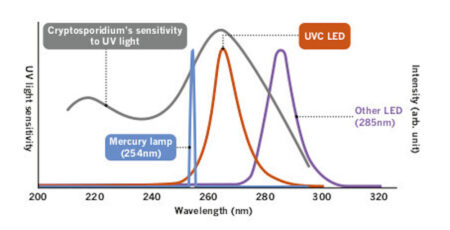
UV irradiation can be used against microorganisms existing on surfaces, in the air, or in water. Historically UV radiation has been generated through gas discharge using low/medium-pressure mercury vapour lamps. However, energy-conscious legislation banning ballasts for these lamps has been in force for some time in various territories. In addition, the UN Environment Global Mercury Partnership is now addressing the toxic effects through initiatives such as the Minamata Convention on Mercury, which bans the manufacture, import, and export of mercury lamps.

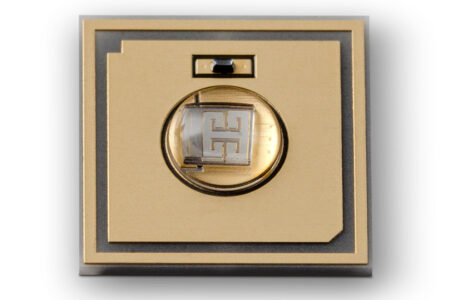
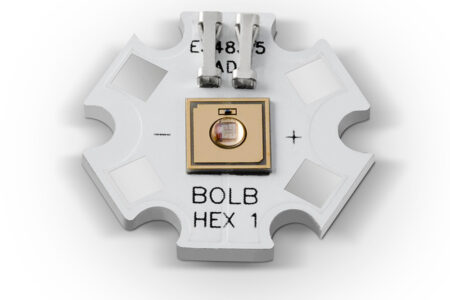
UV LEDs now present an alternative to mercury lamps that are power-efficient, safe, and permissible to use worldwide. The LEDs also deliver performance advantages including a more consistent spectral output, as well as being smaller and more robust than mercury vapour lamps. Thanks to these new light sources, UV irradiation can become an even more powerful ally in the fight against COVID-19.

UV Wavelengths and Applications

The UV spectrum covers wavelengths from about 100nm to 400nm and is divided into three regions, UVA (400nm – 315nm), UVB (315nm – 280nm), and UVC (280nm – 100nm). Different types of UV LEDs are available, with spectral output in each of these regions. Multi-UV LEDs are also being developed, which should allow the flexibility to address a wide variety of applications.

UVA LEDs are used in applications such as dentistry and cosmetics and for industrial purposes such as curing resins, adhesives, and paints. UVA is the safest range of wavelengths for humans to work with. The use of UV-filtering safety glasses is recommended.

UVB LEDs are often used in medical applications such as phototherapy and dermatological treatments. UVB wavelengths encourage the formation of vitamin D in the skin, although excessive exposure can cause skin burns and eye damage.

Radiation in the UVC region has the most effective germicidal properties. These are the shortest and most energetic wavelengths, and hence the most damaging to living cells. The energy at these wavelengths can destroy the DNA of pathogens thereby inactivating them and preventing further reproduction.

UVC LEDs in Action

Typical contexts for germicidal UVC radiation include in-duct systems within HVAC equipment, used to kill airborne viruses, as well as upper-air in-room UVC systems and portable in-room devices for air purification and treatment of surfaces. The international standard ISO 15858:2016 sets out minimum specifications for UV-C devices to ensure human safety, including exposure limits and the use of warning signs for protection.

The standard recognises that UVC has only limited ability to penetrate the skin. About 4-7% of UVC radiation across wavelengths from 250nm to 400nm is reflected or absorbed in the outer epidermis, which contains mostly dead skin cells that are continually shedding. Ocular damage, however, can occur and, although not permanent, can take several days to resolve in cases of acute over-exposure.

Typical UVC disinfection systems operate in the wavelength range from 254nm to 270nm. Far UV wavelengths in the 207nm-222nm range are also used.

When designing with UVC LEDs for sterilisation applications, the radiation intensity is a key parameter that must be evaluated. The inverse square law, which describes the rate at which electromagnetic radiation intensity reduces with distance from the source, dictates that the LED emitter is most effective when placed as near as possible to the surface to be treated. In addition, lenses can be used to concentrate the beam energy into a target area and hence minimise the power and the exposure time needed for effective disinfection. Interchangeable UV lenses can give users flexibility to scale the irradiation output according to the application.

When using UVC within HVAC systems to kill airborne viruses, the airflow rate and geometry of the system are key considerations, in addition to the radiation intensity. A suitable place to position the LEDs can be in ducting at the outlet of a fan, where the airflow is most stable.

For equipment to disinfect surfaces, UVC LEDs with outputs of 2–4mW, powered with about 20mA drive current, can be a good choice for larger surfaces. Smaller-scale applications can be tackled with compact, mid-power UVC LEDs.

On the other hand, high-power UVC LEDs operating at about 100mW are needed for applications such as treating drinking water and pools. These are typically driven at up to 250mA.

Emergency installations created to protect frontline workers include a disinfection tent for cleaning the protective clothing of medical staff at the Huoshenshan Hospital in Wuhan, China, to protect staff and prevent the virus spreading outside the hospital. UVC emitters were fitted to the reflective surfaces of the ceiling, walls, and flooring. During the 30-second disinfection process, the UVC LEDs provide a dosage of 6 mJ/cm2 with a consistent brightness of 200 μW/cm2.

Demand Driving Growth

Germicidal UVC lamps have been available for some time, in various forms including fixed and portable lamps as well as mobile lamps mounted on autonomous robots. Before the global COVID-19 pandemic, the total market for UVC LEDs was worth about $144 million.

The situation has now changed significantly. Analysis by research firm Yole Développement found that demand for UVC LEDs surpassed supply during 2020. The fight against the virus has driven greater demand for these components to perform disinfection in frontline roles and during cleaning of places where people assemble, such as waiting rooms, cinemas, theatres, buses, trains, and passenger aircraft.

Yole’s research found that the LED industry is working to increase manufacturing capacity to meet the increased demand. The UVC LED market is expected to exceed $2.5 billion by 2025, representing a CAGR of 61% since 2019.

Conclusion

UVC LEDs are a safe source of radiation that can be used to protect people and places against harmful microorganisms including the COVID-19 virus. In addition to being inherently safe and approved for use worldwide, containing no mercury, they are also energy efficient, labour-saving, and effective in fixed and mobile UVC lamps for multiple roles including disinfecting surfaces, water, and the ambient environment. UVC LEDs are an important ally in the fight against COVID-19 and the current high demand is expected to continue as the pandemic subsides.

> Read More

Arrow signs visualisation deal with Nvidia

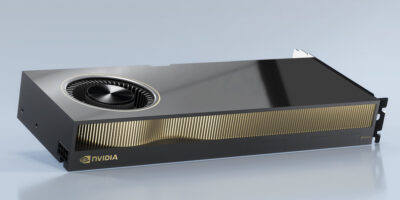
Distributor, Arrow Electronics has announced an agreement with Nvidia to distribute its professional visualisation product portfolio, incorporating Arrow’s full services offering to designers and engineers.

Nvidia’s portfolio provides visual computing for a wide range of industries, including product design, architecture, media and entertainment, and scientific visualisation. The evolution of visualisation means that industries are using advanced engineering simulation and immersive virtual reality (VR). Another driver is the increase in the number of professionals working from home.

“Integrating Nvidia professional visualisation solutions into Arrow’s comprehensive services portfolio, including design engineering, integration, and post-support services, provides the development community comprehensive [artificial intelligence] AI solutions while accelerating time to market,” said Salesh Rampersad, president of Arrow’s global services business.

The addition to the Arrow offering, meets these demands, said Geoff Fancher, vice president of global distribution at Nvidia, for AI, graphics, [high performance computing] HPC, and networking demands for remote working and high-end graphics workflows, he continued.

Arrow Electronics is a distributor which works with over 180,000 leading technology manufacturers and service providers.

http://www.arrow.com

> Read More

NXP and LivingPackets transform E-Commerce with reusable smart packaging for more eco-friendly online shopping

NXP and LivingPackets have joined forces on THE BOX, LivingPackets’ new, intelligent shipping parcel that reinvents smart packaging via an extremely durable, connected and sustainable way to ship packages. THE BOX represents a successful implementation of NXP’s trusted edge and connectivity technologies that enable more efficient e-commerce operations with greater traceability for more convenient consumer experiences while reducing the impact on society.

Why it Matters:
The “Internet of Boxes” has arrived
NXP is committed to help e-commerce companies advance their operations and become more eco-friendly with the “Internet of Boxes”. Retailers worldwide are using NXP RAIN RFID (UHF) technology to securely track and trace parcels along the supply chain, and brands have adopted NXP NFC technology to create intelligent and connected packaging solutions.

Pitney Bowes forecasts that parcel volume will most likely double and reach 220-262 billion parcels by 2026, driving e-commerce companies to continually reduce costs, increase flexibility and enhance order and delivery visibility. At the same time, these companies are being driven to meet the escalating customer expectations for sustainable shipping and delivery options.

“NXP offers an extensive portfolio of edge and connectivity technologies to enable sustainable, efficient e-commerce and smart packaging solutions, which is proven in THE BOX by LivingPackets,” said Olivier Cottereau, Senior Vice President EMEA & SAPAC Sales & Marketing with NXP. “The intelligent box also reflects our commitment to green solutions that support NXP’s Sustainability Program.”

“THE BOX will be the foundation for a new space of possibilities in the world of logistics,” said Fabian Kliem, CTO at LivingPackets. “With the help of innovative technologies from companies like NXP we will make the delivery experience more affordable, convenient and more efficient. Both for customers and businesses.”

Eco-friendly e-commerce

THE BOX is fully recyclable and infinitely reusable with a rechargeable battery and assessed for reconditioning after 1,000 trips. Its rigid and durable case material with shock absorption protects each delivery. The innovative holding system inside THE BOX eliminates packaging waste, such as filling materials and tapes. Labeling and printing are replaced with electronic labels displayed via an onboard tablet display, adding the ability to dynamically change delivery addresses to further reduce the carbon footprint of logistics.

Sending and receiving packages made easy for vendors and shoppers

For vendors, THE BOX offers a plug-and-play solution that is easily integrated into existing systems for simple and lean warehouse processing. It provides end-to-end visibility of where a package is in the supply chain and easy identification to ensure the right person accepts the package. Consumers can now track their packages in near real time and simply tap their NFC-enabled smartphone to THE BOX to accept and unlock their package or reject the parcel upon receipt. THE BOX also opens a range of additional future options for consumers, such as rerouting packages to another person. Vendors and consumers alike have full remote control of every package delivery for easy management, drop off and return of THE BOX.

Details on NXP technology that powers THE BOX by LivingPackets
Each of the LivingPackets shipping boxes includes a small tablet powered by NXP’s i.MX RT1062 crossover MCU that combines high performance and integration for IoT devices. The processor features integrated security capabilities, such as secure boot that helps protect THE BOX tablet from malware and other unknown software.

Additionally, THE BOX includes NXP NFC technology in the form of CLRC663 plus frontend and NTAG I2C plus connected tags to make it possible for consumers to simply tap their smartphone to the box in order to accept or reject the parcel and authenticate themselves. Designed to be an enabler for interactive consumer applications, NXP’s NFC frontend solutions offer a flexible way to add NFC functionality to a system, and in combination with connected NFC tags, provide a cost-effective way to add tap-and-go connectivity to electronic devices.

> Read More

About Smart Cities

This news story is brought to you by smartcitieselectronics.com, the specialist site dedicated to delivering information about what’s new in the Smart City Electronics industry, with daily news updates, new products and industry news. To stay up-to-date, register to receive our weekly newsletters and keep yourself informed on the latest technology news and new products from around the globe. Simply click this link to register here: Smart Cities Registration