Automotive wireless charging reference design is Qi 1.3-certified

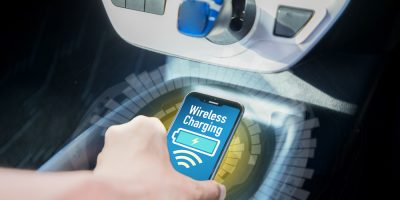
Believed to be the first automotive wireless charging reference design to be certified by the Wireless Power Consortium for the new Qi 1.3 standard, NXP  has released the Automotive 15W Wireless Charging Transmitter reference design.

It consists of a Qi-certified board with an NXP wireless charging MWCT microcontroller, as well as optional NFC, secure element and CAN / LIN transceiver. It also features a software package with NXP’s wireless charging Qi 1.3 software library and a suite of customisable software design to make it easier for developers to bring a Qi-certified wireless charger to market.

The Wireless Power Consortium’s Qi standard is used by most major smartphone manufacturers, including Apple, Samsung and Xiaomi. The Qi 1.3 standard includes new secure authentication features that verify if a smartphone or other wireless power device is Qi-certified and can reduce the wireless power transfer to lower levels if an uncertified device is detected. This ensures user safety and protects equipment from damage. It does, however, requires the addition of secure storage to the wireless power transmitter, addressed by NXP’s automotive-grade products.

Customers can use customise the wireless charging software library, based on the type of wireless charging application targeted. Design options include scaling designs from 5.0 to 15W and above with proprietary protocols, single or multi-coil chargers and across vehicles fleets.

NXP released pre-production details of the WCT-15WAUTO13 multi-coil transmitter reference platform, the first Qi 1.3-certified 15W reference design for in-vehicle wireless charging applications based on the NXP MWCT2xx3A controller IC family.

The system supports 40W power delivery to meet all customised fast charging requirements. It uses automotive-grade components and other automotive functions including EMC optimisation, safety features and MISRA C compliance software. It complies with the Wireless Power Consortium’s Qi v1.3 specification including authentication and is certified as an MP-A13 transmitter type.

http://www.NXP.com

> Read More

Wireless microcontrollers support Bluetooth 5.3 Low Energy specification

Microcontrollers that will support the recently released Bluetooth 5.3 Low Energy specification will be part of the Renesas Advanced (RA) family of 32-bit Arm Cortex-M microcontrollers. They will join the RA4W1 Bluetooth 5.0 LE device introduced last year.

The Bluetooth 5.3 specification was released on July 13, 2021. It includes new features, such as allowing receivers to filter out messages without involving the host stack to improve the receiver duty cycle. It also enables peripheral devices to provide preferred channels to a central device in order to improve throughput and reliability. There are sub-rated connections which improve switching time between low and high duty cycle connections for applications that occasionally need to switch to burst traffic, explains Renesas.

The new microcontrollers will support these features. In addition, they will support the direction-finding functionality introduced in Bluetooth 5.1 as well as the isochronous channels added in Bluetooth 5.2 for stereo audio transmission. Software-defined radio (SDR) capabilities will allow customers to migrate to new specification releases at a later date.

The new products will be supported by the RA family’s Flexible Software Package (FSP) for development of applications and the Renesas QE for Bluetooth LE plug-in. This is a dedicated Bluetooth profile and application development support tool. They will also include the RA family’s security and safety mechanisms, including TrustZone support.

Roger Wendelken, senior vice president in Renesas’ IoT and Infrastructure Business Unit, commented: “By offering early, robust support for the Bluetooth 5.3 LE specification, we will enable our RA customers to be first to market with their next-generation products.”

Renesas reports that the new microcontrollers are being developed using an advanced manufacturing process that will enable high-performance, low power consumption and small package options. Samples are expected to be available in Q1 of 2022.

Renesas Electronics specialises in microcontrollers, analogue, power and SoC products for a broad range of automotive, industrial, Infrastructure, and IoT applications.

http://www.renesas.com

> Read More

Secora Pay on 40nm process offers new applets contactless payments

Contactless payment has been gaining in popularity and Infineon says its Secora Pay portfolio on 40 nm technology addresses many of the new payment card and devices. It uses the company’s Solid Flash chip and offers new applets and customised value-added products for standard payment cards (Secora Pay S) as well as multi-application cards (Secora Pay X) and components to turn any device into a payment device (Secora Pay W).

The product portfolio also provides applets of global (Visa, MasterCard, Discover, and American Express) and domestic networks. It offers state-of-the-art contactless and personalization performance, allowing MasterCard contactless transactions of 200ms.

Secora Pay options on 40 nm technology offer backward compatibility to existing Secora Pay products in terms of card production antenna designs, personalisation and product certification. The family uses a security controller including certified software integrated in coil on module (CoM) chip modules and fine-tuned inlays for seamless card production.

Infineon uses inductive coupling technology and wire embedded card antennas for the CoM system which is claimed to offer high flexibility in card designs. It can be integrated into environmentally friendly cards from recycled and ocean-bound plastic or wood, high performance dual interface metal or LED cards, says Infineon.

According to Infineon, Secora Pay products support the highest throughput in card production with minimum consumable material for manufacturing highly robust dual interface cards. As well as saving resources, new value added services based on Secora Pay’s NFC tag functionality are offered, allowing additional use cases like initial card activation.

The pre-certified Secora Pay W with SPA2.1, a small antenna on 35 mm film tape, addresses the growing demand for payment accessories and new payment form factors. In combination with payment and tokenisation services provided by partners, Infineon explains that it allows the easy integration of payment functionality into end-customer applications, for convenient contactless payment functionalities for wearables like wristbands as well as key fobs or other form factors.

Product versions supporting the latest Visa and MasterCard applications are available now. Additionally, applets supporting American Express, Discover and others will become available in Q1/2022.

http://www.infineon.com

> Read More

Microchip serves ISO 26262 functional safety packages for MCUs

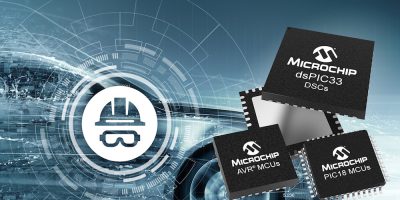
To simplify the design of ASIL B and ASIL C safety applications using dsPIC, PIC18 and AVR microcontrollers, Microchip offers certified functional safety packages.

The certified functional safety packages enable automotive engineers to develop products as per the ISO 26262 functional safety standard. Microchip is releasing ISO 26262 functional safety packages for dsPIC33C digital signal controllers (DSCs), PIC18 and AVR microcontrollers (MCUs) to accelerate the development of safety-critical designs targeting ASIL B and ASIL C safety level and certification efforts.

The functional safety ecosystem for dsPIC33C DSCs includes AEC Q100 Grade 0-qualified functional safety ready dsPIC33C DSCs with dedicated hardware safety features. There are also SGS TÜV Saar-certified ASIL B-ready failure modes, an effects and diagnostic analysis (FMEDA) report and functional safety manual (FSM).

Designers can also access TÜV Rheinland-certified functional safety diagnostic libraries for designs targeting up to ASIL C and a functional safety reference application, showing the steps required to develop compliant designs, and the collateral that must be generated for (ASIL B or ASIL C) compliance

There are also various functional safety analysis reports and certification reports to assist compliance and certification.

For PIC18 and AVR MCUs, the functional safety ecosystem includes AEC Q100 Grade 1-qualified functional safety ready PIC18-Q84 MCUs with CAN FD and AVR DA MCUs with LIN interfaces and both with hardware support for capacitive touch sensors.

There is also the SGS TÜV Saar-certified ASIL B ready FMEDA report and FSM. In addition to functional safety diagnostic libraries, there are also ASIL B-ready certificates and certification reports.

Whether an engineer is new to ISO 26262 functional safety or a seasoned expert, Microchip says it is able to help them meet functional safety requirements and certify designs while minimising cost, risk and development time.

The functional safety packages, together with development tools (complete with the safety documents) allow engineers to develop compliant systems.

Microchip is offering three ISO 26262 functional safety packages to help customers with different levels of expertise and in different stages of their evaluation and design cycles.

The first is the functional safety basic package which offers basic resources like the ASIL B-ready certified FMEDA and safety manual to begin the evaluation of target functional safety levels and the design of safety-critical automotive applications.

Next is the functional safety starter package which offers ASIL B-ready certified FMEDA and safety manual, a reference application and ASIL C-compliant diagnostic libraries that help designers understand the ISO 26262-compliant development process and the reports that must be generated for compliance.

Thirdly, the functional safety full package is for beginners and seasoned experts to simplify the design and certification of safety-critical automotive applications. In addition to the offerings of the starter package, it includes certified diagnostic libraries with source code and the associated safety analysis reports for designs targeting up to ASIL C.

In addition to the functional safety packages, Microchip offers a TÜV SÜD-certified design tool package for its MPLAB development tools ecosystem. This includes a TÜV SÜD-certified MPLAB XC functional safety compiler with the TÜV SÜD certificate, a functional safety manual for the compiler along with safety plans and complete tools classification and qualification reports for the compiler, MPLAB X integrated development environment (IDE), MPLAB Code Coverage and all MPLAB development ecosystem programs. Microchip also offers functional safety-ready CAN FD and LIN transceivers and other companion devices, including voltage supervisor devices, which can be used with the functional safety ready DSCs and MCUs in a range of automotive applications.

The ISO 26262 functional safety ready dsPIC33C DSCs, and PIC18 and AVR MCUs are supported by the TÜV SÜD-certified MPLAB XC16 and MPLAB XC8 functional safety compilers (SW006022-FS and SW006021-FS), the MPLAB Code Coverage tool (SW006026-COV),  MPLAB X IDE, MPLAB development ecosystem debugger/programmers and the safety documentation package to make the tool qualification effort easier.

http://www.microchip.com

> Read More

About Smart Cities

This news story is brought to you by smartcitieselectronics.com, the specialist site dedicated to delivering information about what’s new in the Smart City Electronics industry, with daily news updates, new products and industry news. To stay up-to-date, register to receive our weekly newsletters and keep yourself informed on the latest technology news and new products from around the globe. Simply click this link to register here: Smart Cities Registration