

Renesas adds neural network training to add AI to air quality sensor

Renesas has added embedded AI (e-AI) to its ZMOD4410 Indoor Air Quality (IAQ) sensor platform, enabling smart odour sensing for ventilation systems, bathroom monitoring and controls and air quality monitors.

The company has combined neural network-trained firmware on microcontrollers, such as the Renesas RL78, to provide higher resolution measurement results. With these new capabilities, the ZMOD4410 platform is capable of not only detecting gases in small enclosed rooms with higher accuracy and  improved part-to-part deviation, but can also distinguish between sulphur- and ethanol-based odours, Renesas explains. The upgrades are the first in a family of e-AI-based firmware from the company.

The software-configurable ZMOD platform provides greater design flexibility for smart sensing systems, through firmware upgrades in the field to enable new, application-specific capabilities such as selective measurements to detect volatile organic compounds (VOCs). The upgrades enable IAQ measurement within international guidelines, allowing customers to measure total VOCs (TVOCs) and IAQ in the low parts-per-million range (ppm). The higher accuracy and consistency provides improved estimated carbon dioxide (eCO2) levels. The ZMOD4410 AI firmware can also be implemented on any Renesas microcontroller – including RE, RA, or RX devices – or other general-purpose microcontrollers.

The programmability, stability and sensitivity in measuring VOCs makes the ZMOD4410 suitable for use in smart HVAC systems, ventilator fans, and bathroom lights and switches.

The ZMOD4410 is based on proven metal oxide (MOx) material and each sensor is electrically and chemically tested to ensure consistency from lot to lot. The devices are also highly resistant to siloxanes for reliable operation in harsh applications.

The ZMOD4410 platform with AI and performance firmware is available now.
http://www.renesas.com

> Read More

AI computing targets smart transportation and healthcare

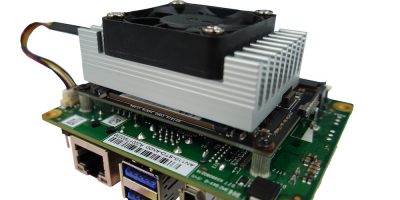
The AN110-XNX edge AI computer developed by Aetina is based on the Nvidia Jetson Xavier NX. It is designed for applications in smart transportation, factories, retail, healthcare, AIoT and robotics.

The AN110-XNX combines the Nvidia Jetson Xavier NX and Aetina AN110 carrier board and measures just 87.4 x 68.2 x 52mm (with fan). It supports the MIPI CSI-2 interface for 1one 4k or two FHD cameras to handle intensive AI workloads from ultra-high resolution cameras to more accurate image analysis. It has 384 CUDA cores, 48 Tensor cores and cloud-native capability to deliver up to 21 Terra operations per second (TOPS).

Bundled with the latest Nvidia Jetpack 4.4 software development kit (SDK), the AN110-NX is an energy-efficient module for embedded edge-computing performance capabilities to support AI workloads which may be constrained by size, weight, power budget, or cost.

Aetina offers a full system, AN110-XNX-EN70 with fanless chassis and back up support in the form of board support packages and design to build configuration updates for both standard and customised platforms in their service policy. Aetina is developing Jetson Xavier NX-based edge computing platforms with 5G communications capability and full function browser-based edge device management.

As an Nvidia-preferred partner, Aetina focuses on delivering edge AI computing based on the Jetson platform for embedded applications. Nvidia Jetson is the leading AI-at-the-edge computing platform, with nearly half a million developers, says Aetina. Support for cloud-native technologies is now available across the Nvidia Jetson lineup, for manufacturers of intelligent machines and developers of AI applications to build and deploy software-defined features on embedded and edge devices targeting robotics, smart cities, healthcare and the industrial IoT.

The AN110-XNX is available now.

Aetina was founded in Taiwan in 2012 as a provider of high-performance general purpose graphics processor unit (GPGPU) and edge AI computing based on the Nvidia Jetson platform for embedded applications. We provide industrial components, system integration and services focused on the industrial and AIoT markets.

http://www.aetina.com

> Read More

Green Hills Software introduces software development tools for RISC-V 

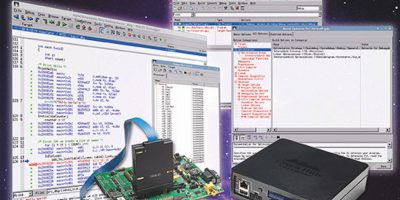
Software development tools targeting 32- and 64-bit RISC-V processor architectures have been announced by Green Hills Software. The company announced availability and early customer adoption of its Multi integrated development environment (IDE), multi-core debugger, optimising C/C++ compilers and hardware JTAG probe for software developers targeting pre-silicon and silicon platforms using RISC-V.

The tools for RISC-V can help developers achieve shorter development times, higher processor performance, and to gain competitive differentiation through the RISC-V’s custom instructions and modular instruction set architecture, says Green Hills.

The Green Hills software development tools support both 32-bit and 64-bit RISC-V architectures and provide for the integer, multiply/divide, atomic, compressed, and single- and double-precision floating point modules. Users can add their own custom RISC-V instructions for use in the Green Hills’ compiler, assembler, Multi debugger, and instruction set simulator. RISC-V’s separate privileged instruction set specification is also supported.

Green Hills compilers support ISO/IEC 14882:2011 (C++11), ISO/IEC 14882:2014 (C++14) and ISO/IEC 14882:2017 (C++17) which offers a number of new language features and standard libraries. They also support Embedded C++ and GNU C/C++ extensions.

Certification support and evidence for MULTI and the C/C++ run-time libraries for RISC-V will be available in CY2021 to enable customers’ FuSa production program requirements.

To help prevent new software bugs in RISC-V applications, an integrated MISRA C/C++ Adherence Checker for MISRA 2004 and MISRA 2012 is seamlessly integrated in the Multi development tools and the DoubleCheck static source analyser identifies programming errors. DoubleCheck automatically runs during compilation, differentiating it from traditional static analysis tools which run separately from the compiler. The Run Time Error Checking tool complements DoubleCheck by finding bugs at run-time that cannot be identified by static analysis alone.

The Multi development tools can quickly identify and solve problems during software development on RISC-V and other 32- and 64-bit processor architectures. They include the Multi debugger and JTAG probe for single-window debugging and control on complex heterogenous SoCs comprised of one or more RISC-V cores with other cores.

The Profiler pinpoints performance bottlenecks by clearly displaying processor times consumed by each task, function, source line, and assembly language instruction.

The Multi development tools, optimizing C/C++ compilers and Green Hills Probe for RISC-V are available today.

https://ghs.com/go/risc-v

> Read More

Basler introduces embedded vision dev kit for Nvidia Jetson

An embedded vision development kit and two add-on camera kits with Basler’s BCON for MIPI interface powered by Nvidia Jetson have been added to the Basler portfolio.

Jetson is the AI platform for autonomous machines and Basler is a preferred partner for Nvidia.

Image processing for today’s AI at the edge applications in robotics, logistics, smart retail, smart factories, and smart cities requires high computing power. The compute and energy efficiency advantages of the Nvidia Jetson platform and Basler’s vision expertise are combined for use in automatic optical inspection and intelligent video analytics.

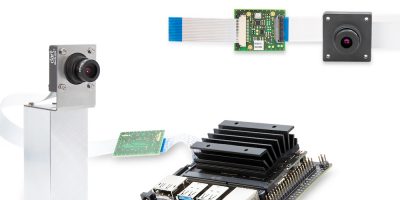
The Embedded Vision Development Kit, includes the Jetson Nano developer kit, and comes with a Basler dart BCON for MIPI camera with a 13 Mpixel, S-mount lens, an adapter board specifically developed for the Jetson Nano module and accessories. Basler has also integrated a new camera driver and sample reference applications to provide developers with a ready-to-use development package for edge AI use cases.

The two add-on camera kits provide the appropriate vision extension for developers already working with a Jetson Nano processor board. The kits contain either a 5 Mpixel or a 13 Mpixel Basler dart BCON for MIPI camera with S-mount lens, an adapter board and accessories. The required driver packages and the Basler pylon software development kit are available for download.

“With the Basler vision kits for the Jetson Nano, developers get an integrated, easy to use solution for vision-based embedded applications in robotics, manufacturing and industrial IoT,” said Murali Gopalakrishna, head of product management for autonomous machines at Nvidia. “Basler’s ongoing support for the Nvidid Jetson platform brings a wealth of experience in industrial cameras into our partner ecosystem,” he added.

Nvidia Jetson has support for cloud-native technologies, enabling manufacturers of intelligent machines and developers of AI applicationsto build and deploy high-quality, software-defined features on embedded and edge devices targeting robotics, smart cities, healthcare, industrial IoT and more, says Basler. Cloud-native support helps manufacturers and developers implement frequent improvements, improve accuracy, and use the latest features with Jetson-based AI edge devices.

A further add-on camera kit for the recently released Jetson Xavier NX is under development. Additional camera kits for Jetson TX2 and AGX Xavier will follow by Q3/2020, added Basler. The company is also developing an embedded vision system with access to cloud services based on a Jetson Nano due to its specific suitability for AI computing tasks on edge devices. This software solution, which extends embedded vision development kits with machine-learning application software, will also be available by Q3/2020.

http://www.baslerweb.com

> Read More

About Smart Cities

This news story is brought to you by smartcitieselectronics.com, the specialist site dedicated to delivering information about what’s new in the Smart City Electronics industry, with daily news updates, new products and industry news. To stay up-to-date, register to receive our weekly newsletters and keep yourself informed on the latest technology news and new products from around the globe. Simply click this link to register here: Smart Cities Registration