


Meeting new AFIR requirements for AC charging points with Vector hardware and software

From 2026 and 2027, operators and manufacturers of AC wallboxes and charging stations must comply with new requirements set out by the Alternative Fuels Infrastructure Regulation (AFIR).

Vector already provides suitable communication controllers, a software library, and a charging and energy management solution to meet these demands. With the upcoming amendments to AFIR, the EU is setting clear rules for an interoperable and future-proof charging infrastructure. Starting January 8, 2026, all newly installed or substantially upgraded publicly accessible AC charging points must support the EN ISO 15118-2:2016 standard. This standard defines digital communication between the vehicle and the charging point via Power Line Communication (PLC), enabling features such as Plug & Charge, which allows vehicles to authenticate automatically—without the need for cards or apps.

From January 1, 2027, AFIR will also require implementation of the EN ISO 15118-20:2022 standard for the same types of charging points and, in addition, for all private ones. This significantly expands communication capabilities. Alongside Plug & Charge’s successor, Park & Charge (PnC), the new standard introduces bidirectional applications. This means electric vehicles can not only draw energy from the grid but also feed it back (Bidirectional Power Transfer, BPT). ISO 15118-20 thus enables new use cases, such as vehicle-to-grid services, where vehicles act as mobile energy storage or provide grid support by stabilizing frequency and voltage.

For many manufacturers, this transition represents a major shift. Until now, most systems have relied on analog communication using Pulse Width Modulation (PWM) as defined in IEC 61851-1. This method only supports basic functions, such as communicating maximum current levels between the vehicle and the charger. More advanced features like PnC or BPT, however, require powerful controllers with digital PLC capabilities. Operators must also ensure their charging points support both ISO 15118-2 and ISO 15118-20 to guarantee full interoperability with current and future vehicle models. Complying with AFIR will therefore require a redesign of many existing devices, including upgrades to processors and PLC chips.

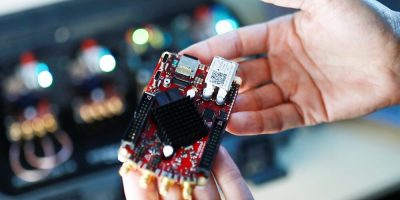
Vector already provides the right technology for this transition. The vSECC.single Board is a control unit that fulfils all AFIR requirements and provides the communication logic necessary for AC charging. It can be flexibly attached to custom electronics, adding intelligent control and communication functionality without restricting PCB design. The vSECC.single variant in a DIN-rail housing uses the same software foundation. For manufacturers developing their own hardware, Vector offers vSECClib, a proven software library ensuring ISO 15118 compliance. Complementing these, the vCharM charging and energy management system supports integration into energy management solutions and enables bidirectional charging.

AFIR is an EU regulation governing the development and operation of infrastructure for alternative fuels, including EV charging points. It applies directly in all EU member states without the need for national transposition. Its goal is to ensure interoperability and user convenience across Europe. The mandatory ISO 15118 support requirements from 2026 and 2027 lay the groundwork for optimised and secure charging throughout the EU.
www.vector.com

> Read More

Red Pitaya’s STEMlab PRO Gen 2 versions now shipping worldwide

Red Pitaya has announced full commercial availability of its STEMlab PRO Gen 2 series. Following a strong response to its initial reveal earlier this year, the Gen 2 platform is now mass-produced and shipping globally, marking the company’s next phase in expanding modular instrumentation for industry, research, and education.

STEMlab Gen 2 architecture offers enhanced RF input performance, lower noise, reduced distortion, and a modernised hardware stack that ensures reliable operation in both laboratory and harsh industrial settings. The system’s new power and operating-system management module, complete with eMMC storage and watchdog functionality, enables faster booting, remote updates, and improved resilience.

Red Pitaya boards are used across a broad spectrum of industrial and scientific applications, from aerospace testing to renewable energy systems and quantum measurement labs. Colorado-based LongPath Technologies has integrated the Red Pitaya STEMlab PRO Gen 2 into its laser-based methane detection network that monitors greenhouse-gas emissions across hundreds of square kilometres.

The STEMlab 125-14 Gen 2 series, comprising the STEMlab PRO Gen 2 and PRO Z7020 Gen 2, is now available across all configurations for immediate order through Red Pitaya’s online store and distributors such as DigiKey, Mouser, and Farnell. Each model maintains full backward compatibility while delivering measurable gains in analog isolation, synchronisation, and signal quality.

Red Pitaya will present the Gen 2 family at embedded world North America 2025 (booth #9042, Anaheim Convention Center), where visitors can see live demonstrations of FPGA-based signal acquisition and control.

redpitaya.com

> Read More

Mouser announces online automotive resource centre

Mouser provides electronic design engineers with the latest information on automotive technology and system design in its automotive resource centre. The digital nature of modern vehicles has escalated the adoption of core technologies like brushless direct current (BLDC) motors for propulsion, sophisticated sensors, and advanced driver-assistance systems (ADAS).

This system-wide transformation has created a new wave of vehicles built from the ground up. At the core are advanced motor control systems that utilise electronic controllers to give BLDC motors optimal torque, reduced maintenance, and increased energy durability. Building on this electronic foundation, autonomous capabilities are integrated through high-performance computing, LiDAR, and V2X protocols. This robust, high-speed electronic system provides real-time data processing, creating a vast network of connected vehicles for a safer ride. These innovations are further accelerated by additive manufacturing, streamlining the production components with AI and digital twin technologies. As a result, today’s vehicles are intelligent, networked systems that create a new era of mobility that is safer, more efficient, and fully connected.

Mouser’s resource content hub features articles, blogs, eBooks, videos, and products from Mouser’s technical team and manufacturing partners. For example, Mouser’s recent eBook with YAGEO, Powering the New Automotive Era with Smart Passive Solutions, explains the role of advanced passive components in managing the heat and reliability when designing modern automotive electrical systems. Engineers can utilise the hub as a resource to stay at the forefront of automotive technology and electrical system design.

resources.mouser.com

> Read More

eInfochips and InOrbit collaborate to offer edge-to-cloud solutions for deploying robots

This collaboration addresses the growing demand for large-scale autonomous mobile robot (AMR) deployments in warehouses, industrial hubs, large factories, and other indoor environments. The collaboration provides a solution for the full robotics stack, including hardware design, power and motor control, sensor fusion, edge AI, Functional safety and security, and digital twin. The InOrbit Space Intelligence platform complements this by offering critical tools for large-scale observability, real-time incident management and operations, multi-vehicle orchestration and continuous performance optimisation. Together, the companies will enable businesses to deploy diverse AMR fleets, increasing flexibility and achieving true operational scale.

This integrated solution is designed to significantly reduce complexity and time-to-market for businesses looking to automate repetitive tasks like material handling, goods delivery, cleaning, and sorting. It offers a single pane of glass to manage and monitor entire fleets across multiple locations and geographies, helping ensure seamless operation and maximum efficiency.

“We’re excited to collaborate with InOrbit to offer our customers comprehensive robotics deployment services at scale,” said Barrie Mullins, assistant vice president, eInfochips. “By combining our edge-to-cloud design expertise with InOrbit’s powerful Space Intelligence platform, we’re significantly reducing the time-to-market for businesses looking to deploy and manage AMR fleets.”

“eInfochips’ deep understanding of robotics and global integration capabilities makes them an ideal partner for InOrbit,” said Florian Pestoni, founder/CEO, at InOrbit.AI. “This collaboration is a critical step in making advanced multi-vendor, multi-site deployments a reality. By combining our strengths, we’re empowering enterprises across industries to optimise their physical operations, ensuring that people and robots work better, together”

The companies plan to showcase their joint solution at the upcoming Robo Business conference, taking place Oct. 15–16, 2025, at the Santa Clara Convention Centre. Attendees can visit the joint booth for a live demonstration of their integrated fleet management capabilities.

www.einfochips.com

www.inorbit.ai

> Read More

About Smart Cities

This news story is brought to you by smartcitieselectronics.com, the specialist site dedicated to delivering information about what’s new in the Smart City Electronics industry, with daily news updates, new products and industry news. To stay up-to-date, register to receive our weekly newsletters and keep yourself informed on the latest technology news and new products from around the globe. Simply click this link to register here: Smart Cities Registration