

Smart Home: Most Germans willing to pay significantly more for data security

 Summertime is the season for traveling, making it the peak season for burglars. As a result, more and more consumers are keeping a remote eye on their home via camera and smartphone app. However, smart home or smart living solutions, whether it’s electric shutters, connected smoke alarms or lighting control, are often unprotected against cyber attacks. Attackers can spy out houses and residents via the Internet, steal bank details or even open digital door locks.

According to a representative survey* carried out by GfK for Infineon Technologies, German consumers are aware of these security risks. Most of the respondents from all age and income groups are willing to pay significantly more for devices which are protected against attacks and data theft: For 35.4 percent of the respondents the limit is up to an additional 10 percent; a further 20.9 percent would pay up to 19 percent more, and 8.4 percent would even accept a surcharge of 20 to 25 percent.

More than 60 percent of the respondents also think that a label that provides information about the security level of the product would be helpful when deciding which product to buy. The security labels for connected devices could be presented in a transparent and comprehensible way, similar to the EU energy efficiency label for the fridge or washing machine.

“Securing a smart home is rather complicated, yet this is exactly where consumers are left to fend for themselves,” says Thomas Rosteck, head of the security division at Infineon. “As already with PCs, the security level of connected electronics could be increased considerably through the use of firewalls, data encryption or an individual password. Simple measures already help to protect users’ privacy, create trust in new applications and offer manufacturers an advantage to set them apart in the competitive smart home market.”

Restraint in home appliances and home monitoring

According to the survey, connected consumer electronics like smart TVs, game consoles or tablets are especially widespread despite the security risk being rated as relatively high. 68 percent of German households own at least one device in this category and have connected it to the Internet. Smart speakers can already be found in 23.8 percent of the households.

By contrast, the respondents are more restrained when it comes to solutions for home monitoring and security, energy management, home appliances and lighting control. The security risk here is rated in all age groups as especially high and existing devices are far less frequently online. This is noticeable particularly with home appliances such as fridges, washing machines or robovacs. A total of 52.9 percent of the respondents say they own an Internet-ready device, but only 17 percent have connected it to the Internet.

Consumers are also paying more attention to the security risks of these smart devices when purchasing them: 47 percent of the respondents have already examined the security features of solutions for home monitoring and security in great detail or would do so on a future purchase – compared to 22.8 percent for entertainment solutions.

Cybersecurity requires binding stipulations and certification

There are still no binding stipulations for smart home appliance manufacturers when it comes to data security. The European Union is, however, determined to raise the security level in the European Single Market. The EU Cybersecurity Act will come into force on June 27, 2019. It introduces EU-wide rules for the cybersecurity certification of products, processes and services. The measures also concern consumer electronics that bear the CE label.

*1,000 people aged 14 or over in Germany were questioned in January 2019 for the representative online survey by GfK.
> Read More

mu Space to participate in the Qualcomm Smart Cities Accelerator Program

Satellite and space technology company mu Space announced today its participation in the Qualcomm Smart Cities Accelerator Program from Qualcomm Technologies, Inc. The program, which Qualcomm Technologies launched in April, aims to connect cities, government agencies and enterprises with service providers offering Qualcomm Technologies-based smart city solutions. mu Space is the first Thai company to participate in the program.

“At mu Space, our mission is to develop the best quality products. As such, we only work with the best in the industry. We’re excited to be offering high-quality products utilizing Qualcomm Technologies’ cutting-edge tech for smart cities applications in Thailand and other countries in the future, and we are proud to join this program,” said Suwit Pruckwattananon, Chief Business Development Officer at mu Space.

“mu Space is a leader of innovative technologies in Southeast Asia,” said Sanjeet Pandit, senior director of business development and head of smart cities, Qualcomm Technologies, Inc. “The Qualcomm Smart Cities Accelerator Program provides a central hub for smart cities solutions across regions and verticals, and we are pleased to see mu Space participate as the first Thai company in our program.”

Aside from space and satellite technology, mu Space is also focusing on developing Internet of Things (IoT) solutions. Founded in 2017, the company has so far disclosed its plan to include two IoT devices — a smart apparel and a smart tracker — in their product line up.

In 2018, mu Space has first started developing the design of its own smart apparel that is capable of controlling internal temperature and equipped with a health monitoring system. In January this year, mu Space unveiled another IoT product, a smart tracker, that can provide a more accurate real-time location to track the whereabouts of a person, to find lost valuables or to monitor the movement of assets.

“Expect to have more and more IoT-enabled devices being developed every year as demand for IoT continues to increase in homes, big companies and smart cities. Spending is rising as people are starting to realize the benefits of IoT in making daily tasks easier and more automated,” Suwit added.

According to the International Data Center’s market research on IoT for 2019, the worldwide spending on consumer IoT this year is expected to reach $108 billion. The research further stated that the leading consumer use cases will be related to smart home, personal wellness, and connected vehicle infotainment.

> Read More

Siemens integrates the u-blox ZED-F9K module into its V2X test fleet

The ZED-F9K turnkey solution minimizes the effort required to achieve decimeter-level positioning accuracy in automotive applications.

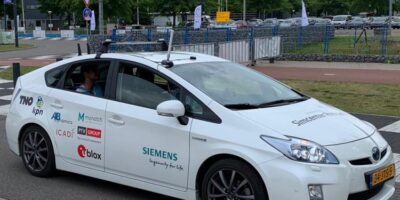
Thalwil, Switzerland – June 7, 2019 – u-blox (SIX:UBXN), a global provider of leading positioning and wireless communication technologies for the automotive, industrial, and consumer markets, is announcing that Siemens has integrated the u‑blox ZED-F9K (https://www.u-blox.com/en/product/zed-f9k-module) high precision dead reckoning module into its Toyota Prius V2X (vehicle-to-everything) test fleet. Siemens carried out live demonstrations of the technology at the ITS European Congress 2019 (https://2019.itsineurope.com/) in Eindhoven, the Netherlands.

As the only available source of absolute position, satellite-based positioning plays a crucial role in advanced driver automation systems and driverless vehicles. The same is true in V2X communication, in which vehicles continuously share their location and other information with other traffic participants – cars and pedestrians – as well as surrounding infrastructure,  improving road safety and reducing traffic congestion.

V2X test vehicles typically determine their position using high-end, expensive GNSS (Global Navigation Satellite Systems) receivers. While these provide highly accurate position information, they fail to realistically represent the hardware that will be deployed in vehicles produced for the mass market. By opting to use the ZED-F9K turnkey solution for high precision dead reckoning, Siemens was able to align the performance of their test fleet with real world conditions while also reducing the cost and the engineering effort required to develop their vehicles.

“We’ve had a very positive experience with u-blox’s ZED-F9K high precision dead reckoning solution. The product delivered strongly from the initial design-in to the data and performance in our first tests,” says Igor Passchier, Engineering fellow, Connected and Automated Driving at Siemens PLM Software. “It underscores the reputation of u‑blox as a trusted innovator in GNSS technology.”

“Our collaboration with Siemens shows the extent to which the ZED-F9K turnkey solution saves OEMs time, cost, and engineering effort while providing decimeter-level positioning performance,” says Alex Ngi, Product Strategy for Dead Reckoning, Product Center Positioning, u-blox. “For us, it has also been a welcome opportunity to contribute to solving the challenges in the autonomous driving ecosystem.”

> Read More

Smart mobility: Ukrainian city of Vinnitsa selects CIPURSE™ for transit ticketing

The city of Vinnitsa, Ukraine, is implementing a new, state-of-the art system for automated fare collection based on the CIPURSE™ open security standard. Infineon Technologies AG has been selected as sole supplier of the security chips to be embedded into 200,000 transportation cards for the city’s trams and busses. The cards will be issued from summer 2019 onwards.

The project is led by the municipal company Vinnitsa Card Service. Infineon is providing the CIPURSE security chips to be embedded into the cards. The hardware equipment for the terminals is being sourced from Mikroelektronika from the Czech Republic while Symbol Systems from Ukraine is responsible for software integration.

In a next step, the city of Vinnitsa will introduce social cards which combine transport ticketing with payment functionality. As part of the Ukrainian government’s roadmap towards a digital economy and society, similar projects have already been implemented in Ukraine. Local banks in the city of Zhitomir, for example, are issuing multi-application cards with CIPURSE-based security chips from Infineon.

Seamless and convenient solutions for public transportation

Population growth and continued urbanization are placing a growing strain on the environment. Public transportation is one of the key livability factors in a modern, smart city, extending beyond the obvious bus and train options to include services such as car-sharing and bike rentals. At the UITP Global Public Transport Summit in Stockholm, 9-12 June 2019, Infineon will be exhibiting transit ticketing solutions for seamless and convenient mobility

CIPURSE is an internationally supported, non-proprietary security standard for transport ticketing and access solutions. The specifications are managed by the OSPT Alliance. The truly open standard is highly flexible, supporting cards and tickets while also providing guidance for multi-purpose solutions. It is also supported in smartphones and therefore offers a convenient alternative to contactless tickets. Furthermore, providing future-proof security architectures based on Advanced Encryption Standard (AES) 128-bit key length, CIPURSE eliminates the fraud problems that tend to compromise existing proprietary systems.

More information is available at www.infineon.com/cipurse

> Read More

About Smart Cities

This news story is brought to you by smartcitieselectronics.com, the specialist site dedicated to delivering information about what’s new in the Smart City Electronics industry, with daily news updates, new products and industry news. To stay up-to-date, register to receive our weekly newsletters and keep yourself informed on the latest technology news and new products from around the globe. Simply click this link to register here: Smart Cities Registration