DigiKey and Arduino host prototyping webinar

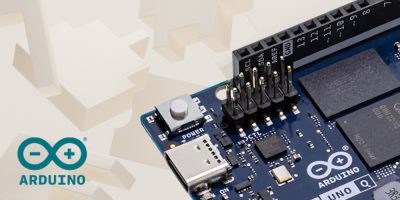
DigiKey has announced an upcoming webinar, “From board to build: Using UNO Q and App Lab,” which will take place Feb. 12, 2026, at 9 a.m. CST.

The webinar, sponsored by Arduino, will explore how Arduino’s UNO Q and App Lab work together to accelerate prototyping, enable intelligence at the edge and simplify application development. It will give attendees an inside look at workflows, capabilities and real implementation examples, ideal for builders of smart systems, IoT solutions or proof-of-concept prototypes.

Arduino principal product evangelist Andrea Richetta, who has shaped some of Arduino’s most strategic initiatives, will be the primary speaker. He will be joined by Chad Dziengel, product manager, IoT and wireless, for DigiKey, who will moderate the discussion. Register for the webinar here. Recordings are available for all registered participants.

“DigiKey is proud to partner with Arduino on this webinar, which will help designers unlock new potential with the versatility of the powerful UNO Q and App Lab combination,” said David Sandys, senior director of technical enablement & engagement for DigiKey. “We look forward to discussing insights from experts who will share techniques to accelerate workflow, enhance the capabilities of projects and more.”

event.on24.com

> Read More

Mouser explores the challenges of powering AI in new eBook from Renesas

Mouser has announced a new Interactive eBook in collaboration with Renesas Electronics that explores how data centres are evolving to meet the power demands of artificial intelligence (AI).

The requirements of Generative Artificial Intelligence (GenAI) are pushing data centre power consumption ever higher. The cost of running a data centre was already heavily driven by its electricity bill, so this surge in consumption has only led to an increased importance in energy efficiency for data centre power management. In Powering AI: High-Density Power Distribution in Modern Data Centres, AI industry-leading experts discuss topics such as the shift to higher-voltage power delivery and how digital power technologies enhance energy efficiency. Videos demonstrate how liquid cooling enables higher server density and how utilising more efficient gallium nitride (GaN) and metal-oxide semiconductor field-effect transistors (MOSFETs) in power circuits allows engineers to design smaller, lighter power systems. The eBook also includes an interactive infographic detailing how power flows through a typical data centre. Renesas has a long history in the field of power management and offers customers a broad portfolio of products and solutions, many of which are highlighted in the eBook. Among the Renesas products available from Mouser are:

The Renesas REXFET-1 power MOSFETs feature ultra-compact, leadless designs for enhanced thermal performance, management, and reliability. The REXFET-1 wafer manufacturing process enables the devices to reduce on-resistance by up to 30 percent and an up to 10-percent reduction in Qg characteristics for higher efficiency.

The ISL99390FRZ smart power stage (SPS) module offers best-in-class current sense accuracy over line, load, and temperature. When combined with a Renesas digital PWM controller, these devices enable precision system-level power management and best-in-class transient response for loadline-based regulators. These devices simplify design by eliminating typical DC resistance (DCR) sensing networks and associated thermal compensation components.

The ISL68239 12-phase PWM controller uses the proprietary Renesas digital synthetic current modulation scheme to achieve the industry-best combination of transient response, ease of tuning, and efficiency across the full load range. Developers can use the intuitive Renesas PowerNavigator™ software to easily configure and monitor the device.

The TP65H015G5WS SuperGaN FET combines a state-of-the-art high voltage GaN HEMT with a low voltage silicon MOSFET to offer superior reliability and performance. The device uses advanced epitaxy (epi) and patented design technologies to simplify manufacturability while improving efficiency over silicon via lower gate charge, output capacitance, crossover loss, and reverse recovery charge.

mouser.com

> Read More

Satellite monitoring systems for real-time RF intelligence from Teledyne

Satellite monitoring enables continuous observation of satellite communications and navigation signals to ensure link quality, detect interference, and verify compliance with spectrum regulations. These systems provide global and consistent visibility of uplink and downlink behaviour, which is critical for applications ranging from GNSS integrity and spectrum surveillance to interference hunting and system validation.

The primary objective of satellite monitoring is to maintain the integrity of space-to-ground and ground-to- space links. This includes verifying uplink and downlink quality, detecting unintentional or malicious interference, and supporting regulatory enforcement. Architecturally, monitoring systems are typically structured around three elements: the space segment, consisting of satellites with transponders and antennas operating in defined frequency bands; the ground segment, which includes monitoring stations equipped with large antennas, RF front ends, and digitisers; and the user segment, where specialised software and hardware analyse and visualise the captured data.

Satellite services operate across designated radio-frequency bands, each divided into uplink and downlink sub-bands in bidirectional systems in order to minimise mutual interference. Downlinks are usually allocated to the lower portion of a band due to lower atmospheric attenuation, while uplinks occupy higher frequencies to support higher data rates. Sub-band definitions vary by system; for example, Galileo uses “E” designations within the L-band rather than the “L” nomenclature used by other GNSS constellations.

From a monitoring perspective, this diversity makes frequency planning and sampling strategy critical. The sampling rate must ensure that the signal of interest occupies a single Nyquist zone, with out-of-band components suppressed through analog filtering. For direct sampling, this typically translates to minimum rates of approximately 2 GSPS for L-band, 4 GSPS for S-band, and 8 GSPS for C-band, assuming
appropriate bandpass filters are applied.

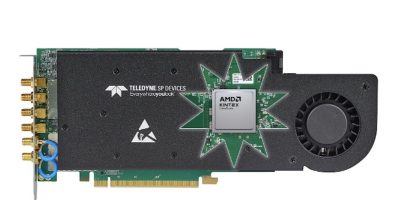
Modern monitoring stations rely on wideband digitisers to convert analog RF signals into digital data streams. Devices such as the ADQ35-WB from Teledyne SP Devices support direct sampling of L- and S-band signals without frequency mixers, reducing system complexity and calibration effort. With 12-bit resolution and up to 9 GHz usable input bandwidth, such digitisers enable flexible deployment across multiple satellite bands. External low-noise amplifiers and anti-alias filters remain essential to preserve signal fidelity and prevent spectral folding during analog-to-digital conversion.

Sampling-rate selection directly impacts both data integrity and downstream processing efficiency. For example, sampling the L-band at 5 GSPS places the signal entirely within the first Nyquist zone, while S- band undersampling at 4 GSPS confines the signal to the second Nyquist zone with sufficient guard bands. In contrast, poorly chosen rates can split the signal across Nyquist boundaries, introducing unavoidable aliasing.

Raw data rates from wideband digitisers can exceed practical transfer and storage limits. At 10 billion samples per second and two bytes per sample, a single channel generates around 20 GB/s. To manage this volume, onboard FPGA processing is used to reduce data rates before transfer over PCIe links.

Two approaches are particularly relevant for satellite monitoring. Bit compression reduces the number of bits per sample, enabling continuous streaming within PCIe bandwidth constraints while preserving full-band information. Digital down conversion, implemented through FPGA-based numerically controlled oscillators, filters, and decimation stages, translates selected RF channels to baseband or intermediate frequencies. This not only reduces data rates but also improves signal-to-noise ratio through filtering and coherent processing.

For real-time and near-real-time analysis, PCIe-based architectures are preferred. Peer-to-peer data transfer allows digitisers to stream data directly to GPUs using DMA, bypassing host CPU and system memory. This minimises latency and enables aggregate throughputs approaching the limits of PCIe Gen5, supporting simultaneous streams from multiple digitisers.

GPUs complement FPGA processing by handling computationally intensive but less latency-critical tasks, such as channelisation, demodulation, and long-term statistical analysis. For example, extracting individual Galileo sub-bands from a wideband L-band capture can reduce data rates from hundreds of megahertz of spectrum to a few gigabytes per second, well within modern GPU capabilities.

When long-duration recording is required, storage bandwidth can become a limiting factor. RAID configurations based on NVMe SSDs, connected via PCIe carrier boards, allow parallel writes across multiple drives. Enterprise-grade SSDs maintain sustained write speeds over long periods, enabling aggregate recording rates of tens of gigabytes per second and total capacities reaching the petabyte scale per slot. Consumer-grade drives remain suitable for shorter captures but exhibit throughput degradation once internal SLC caches are exhausted.

By combining wideband digitisation, FPGA-based pre-processing, GPU acceleration, and scalable PCIe storage, modern satellite monitoring systems provide a cost-efficient and flexible foundation for RF intelligence. This architecture supports evolving requirements such as multi-band monitoring, real-time interference detection, and large-scale data capture, making it suitable for both operational monitoring networks and research-oriented measurement campaigns.

spdevices.com

> Read More

Arrow supports .lumen in scaling production of Its glasses for the blind

Arrow Electronics is collaborating with Romanian startup .lumen to scale intelligent guide glasses designed to replicate the key functions of a guide dog.

.lumen’s Glasses for the Blind replicate the essential functions of a guide dog by combining artificial intelligence (AI), six integrated cameras, and real-time haptic feedback on a single wearable headset. The glasses continuously scan and understand the environment in real time, detecting obstacles, identifying safe paths, and guiding the user with gentle directional vibrations.

The entire navigation system runs locally on the device, making it fully independent from the cloud. This architecture delivers ultra-low latency, which is essential for safe, reliable navigation in fast-changing environments such as crowded streets or unfamiliar indoor spaces.

.lumen exhibited on Jan. 5-9, 2026, at CES, Las Vegas, where they were named a CES Innovation Awards 2026 Honouree in the Accessibility and Longevity category, and also won the CTA Foundation’s 2026 Pitch Competition.

Arrow is providing engineering and supply chain services to enable .lumen to scale its production efficiently. This includes identifying, sourcing, and integrating the lengthy list of electronic components required, such as processors, cameras, sensors, and connectors. Arrow is also supporting .lumen with inventory reliability, cost control, and improved performance of the complex wearable technology.

By supporting the development of this technology, Arrow is expanding on its existing work in Semi-Autonomous Mobility (SAM), which uses intelligent technology to provide greater independence to people with physical disabilities. An example of Arrow’s previous work in this area is the Arrow SAM Car, the series of advanced cars that can be controlled by a quadriplegic race driver with support from an AI model and electronics developed by Arrow engineers.

“We are helping to create a device which will eventually make life better for millions of people,” said Vitali Damasevich, Arrow’s regional director of engineering in Eastern Europe. “At Arrow, we are committed to supporting the .lumen team to help ensure this breakthrough technology can be reliably and efficiently manufactured so it can get into the hands of those who need it most.”

“Growing up in a family where everyone but me had a disability, I realised how much technology can help people with disabilities, but also how rarely it’s built for people with disabilities. I founded .lumen to solve this,” said Cornel Amariei, founder & CEO of .lumen.

“The Glasses for the Blind use .lumen’s proprietary Pedestrian Autonomous Driving AI technology. It does everything a self-driving car does, but on the pedestrian side. The best part is this technology doesn’t need any infrastructure change.”

.lumen is currently taking orders for the device, which aims to provide users with unprecedented mobility and freedom. Future software updates include features such as “Take Me,” which is designed to integrate with mapping services and extend navigation capabilities beyond obstacle avoidance.

arrow.com

> Read More

About Smart Cities

This news story is brought to you by smartcitieselectronics.com, the specialist site dedicated to delivering information about what’s new in the Smart City Electronics industry, with daily news updates, new products and industry news. To stay up-to-date, register to receive our weekly newsletters and keep yourself informed on the latest technology news and new products from around the globe. Simply click this link to register here: Smart Cities Registration