

R&S and Broadcom showcase first Wi-Fi 8 RF signalling tests, paving way for next-gen connectivity

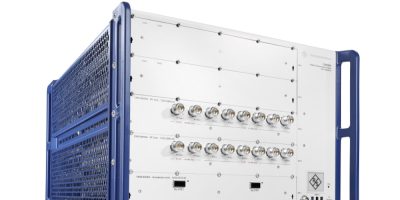
Rohde & Schwarz, in collaboration with Broadcom, will display its CMX500 multi-technology multi-channel signalling tester at MWC Barcelona 2026 with newly added Wi-Fi 8 (IEEE 802.11bn) testing capabilities. The setup at the Rohde & Schwarz booth (5A80) will validate a prototype Wi-Fi 8 device from Broadcom, showcasing physical layer features unique to Wi-Fi 8.

As Wi-Fi transitions beyond increasing throughput, the IEEE 802.11bn amendment introduces crucial advancements focused on delivering consistent, high-quality connectivity across a diverse range of dense environments. It is designed to handle the growing number of connected devices and the increasing demands of applications like VR/AR, 8K streaming, and industrial IoT.

Wi-Fi 8 builds upon the foundation of Wi-Fi 7, retaining core physical layer parameters like supported frequencies up to 7.125 GHz, channel bandwidths up to 320 MHz and 4096QAM modulation, as well as Multi-Link-Operation (MLO). However, to achieve its UHR goals, IEEE 802.11bn introduces a suite of innovative PHY and MAC layer technologies that present new testing hurdles.

For example, Wi-Fi 8 uses distributed resource units (dRU) to overcome power spectral density (PSD) limits. With dRU measurements users can validate their device’s effectiveness in boosting uplink transmit power and improving connection reliability. Another technology is unequal modulation (UEQM), where throughput is improved in difficult reception scenarios by allowing each MIMO link to use a different modulation scheme. With UEQM analysis, users can assess the ability of the test device to adapt the modulation in the correct way, using the specified modulation of coding scheme (MCS) combinations. With comprehensive signalling mode tests, covering a broad range of Wi-Fi 8 features, users can perform in-depth analysis of performance

The CMX500 is a modular, powerful one-box signalling tester enabling comprehensive multi-technology testing. It covers LTE and NR in SA/NSA modes, NR-NTN, NB-NTN, Direct-to-Cell (D2C/DTC) testing and WLAN including Wi‐Fi 7 and Wi‐Fi 8. Consequently, the CMX500 allows R&D engineers of wireless devices to test their design’s operation in both cellular and non-cellular standards of the latest generation in a single instrument setup.


www.rohde-schwarz.com

> Read More

Murata expands ZENCROSS Alliance IoT ecosystem with new engineering and development partners

Murata expands the ZENCROSS Alliance ecosystem with the addition of qualified engineering and development service partners – Professional Software Associates and Grinn – to accelerate productisation and deployment of low-power IoT solutions. Key application areas include smart cities and infrastructure, asset tracking and logistics, energy management and utilities, smart buildings and environmental monitoring, and consumer and commercial connected products.

As IoT solution stacks grow more complex, spanning hardware, connectivity, firmware, and cloud services, design teams are under mounting pressure to deliver faster while minimising engineering risk. At the same time, many teams face a shortage of in-house expertise in IoT system integration, making it difficult to move confidently from concept to deployment. This has shifted the focus from prototypes to scalable, production-ready designs that perform reliably in the real world. To meet these demands, companies are increasingly seeking trusted ecosystems built on vetted partners and proven technologies that reduce uncertainty and accelerate time-to-market.

The ZENCROSS Alliance brings together a Murata-led, curated ecosystem designed to simplify IoT development and reduce supplier fragmentation and integration risk. Direct engagement with Murata and its partner network ensures stronger technical support, early access to emerging technologies, shorter design cycles, and reduced rework, helping organisations move from concept to market with greater confidence and speed.

“The ZENCROSS Alliance is not a standalone supplier or consultancy, but an IoT ecosystem accelerator,” explains Tomy Runne, Vice President, Strategic Marketing, Murata Europe. “By combining Murata technology leadership with a trusted network of qualified technology and engineering partners to deliver faster, lower-risk IoT solution development from concept through to deployment.”

At the ZENCROSS Alliance’s foundation are Murata’s advanced sensing, RF, connectivity, and module technologies, including Type 1SC, Type 2GD, and Sequans Cat.1bis, optimized for performance, power efficiency, and reliability. Global cellular connectivity and device management are delivered through Aeris IoT Accelerator (IoTA) Connectivity Management Platform and best-in-class network operators such as Telenor IoT, and Ooredoo, enabling worldwide reach with localised connectivity plans as needed.

Tartabit’s IoT Bridge further accelerates solution delivery by providing low-power wireless integration, data orchestration, and device management, delivering ready-to-consume data to enterprise applications and hyperscaler clouds, including AWS, Microsoft, and Google Cloud Platform. Aeris IoT Watchtower via IoTA reinforces security by providing continuous IoT cybersecurity monitoring and protection.

To accelerate productisation and deployment, the ZENCROSS Alliance continues to expand its ecosystem with new engineering and development partners – Professional Software Associates and Grinn – bringing deep expertise in system design, firmware, and application development. Complemented by Thales’ leadership in eSIM solutions, along with its proven reference architectures and integration frameworks, these partners enable scalable, production‑ready designs rather than mere prototypes

zencross-alliance.com

> Read More

Mouser announces Edge computing online resource hub for engineers

Mouser is providing engineers with the latest information in its extensive edge computing resource centre. Reshaping how digital intelligence interacts with the physical world, edge computing moves computation closer to where data is created and away from cloud-first architectures.

Driven by the need for low latency and reliable operation during connectivity disruptions, processing data locally rather than in the cloud enables real-time applications directly on the device. As these systems scale, blockchain technologies are emerging as a critical trust layer at the edge, providing secure device identities, tamper-evident data logging, decentralised coordination, and authenticated firmware updates. Edge intelligence also underpins ambient computing, seamlessly blending technology into everyday life. In real-world applications, edge AI, combined with cellular IoT and machine vision, can deliver timely local interventions, such as pest detection and crop monitoring in agriculture. Overall, edge computing transforms devices from passive data collectors into autonomous, intelligent systems capable of operating reliably at scale.

Mouser’s technical team and trusted manufacturing partners tailor the content to provide a source of articles, blogs, eBooks, and new products for edge computing from top manufacturers. Recent eBook collabs with NXP and Micron, published on the online hub, offer engineers the expert knowledge they need, like security and regulatory compliance, and the various design challenges to develop innovative solutions for the edge.

resources.mouser.com

> Read More

AI Insights Survey: EMEA engineers embrace AI as adoption accelerates across regions

Engineers across EMEA are increasingly embedding artificial intelligence (AI) into products being shipped to customers, as AI moves decisively from experimentation into real-world production, according to the latest Avnet Insights 2026 Survey.

The annual global survey gathered responses from approximately 1,200 engineers worldwide, providing a representative view of how AI adoption is evolving across different markets and industrial environments. Across the EMEA region, the findings reflect a diverse landscape, where AI adoption is accelerating at different speeds depending on industrial focus, regulatory environments and production maturity.

Globally, more than half of engineers surveyed (56%) say they are currently shipping products with AI incorporated into their designs, representing a 33% year-on-year increase. Adoption levels vary by region, reflecting different industrial priorities, regulatory environments and production lifecycles. For example, 41% of respondents in Germany report shipping AI-enabled products today, suggesting a more selective, industry-led approach, while other regions are accelerating at different rates.

Across EMEA, engineers remain cautiously optimistic about market conditions, supported by faster production schedules and continued customer demand. At the same time, the survey highlights a consistent set of challenges organisations are working through as AI becomes more deeply embedded in product design and development.

Data quality (46%), integration with existing tools (38%) and cost (37%) are cited as the main design challenges when integrating AI into products. From an operational perspective, continuous learning and maintenance (54%) and sustainability (43%) are top considerations as AI-enabled systems scale into full production.

The survey also points to growing momentum behind multi-modal AI, with engineers increasingly combining Edge AI and machine learning (ML) to deliver greater functionality, efficiency and value. Nearly all respondents (96%) expect AI-powered tools to significantly influence product design and development over the next three to five years.

“AI has clearly moved beyond proof-of-concept for engineers across EMEA regions,” said Dan Ford, VP Sales and Services EMEA, Farnell. “What we’re seeing now is a focus on scaling AI responsibly — balancing innovation with data integrity, system integration and sustainability as AI-enabled products move into production.”

The findings highlight how AI is becoming a standard part of product development across EMEA, with regional differences shaping how the technology is adopted. These are expected to resonate strongly with engineers and manufacturers across EMEA as AI, automation and sustainability remain key priorities in 2026.

The full Avnet Insights 2026 AI whitepaper is available to download via Farnell’s AI Hub, where engineers can also discover how to accelerate their projects and access solutions, platforms, and resources to support AI adoption in design and production.

uk.farnell.com

> Read More

About Smart Cities

This news story is brought to you by smartcitieselectronics.com, the specialist site dedicated to delivering information about what’s new in the Smart City Electronics industry, with daily news updates, new products and industry news. To stay up-to-date, register to receive our weekly newsletters and keep yourself informed on the latest technology news and new products from around the globe. Simply click this link to register here: Smart Cities Registration