


Mouser Electronics, explores the latest developments, advancements and challenges in electric and hybrid vehicle technology through its EV/HEV resource hub. Staying ahead in this rapidly evolving industry is crucial for engineers and innovators. With advancing technologies like bi-directional charging and vehicle autonomy entering the market, it’s more important than ever to stay up to speed. Mouser’s EV/HEV resource hub offers a wealth of content, including eBooks, blogs, articles, products, and more, all designed to keep engineers at the forefront of these technological advancements.
Across the globe, electric vehicles (EV) and hybrid electric vehicles (HEV) are changing not just the way people drive but also the way people live. Electric infrastructure is advancing with the use of emerging technologies, such as liquid-cooled HPC connectors, while still maintaining the latest industry standards and lowering maintenance costs. This development empowers the future of eMobility, as discussed in Mouser’s interactive content series Electrifying the Future of eMobility, exploring how current renewable energy sources and evolving technologies like hydrogen electrolysis are driving toward a net-zero future.
The EV/HEV technology content hub offers engineers easy access to resources from Mouser’s technical team and leading manufacturers. In a recent eBook with TE Connectivity, EV and Connected Transportation, industry experts explain the tandem movement of e-mobility and connected travel via new standards and the use of the V2X ecosystem to make more efficient, accurate, and safer roads for vehicles. The benefits and challenges of designing solutions for the future of transportation are discussed in depth, including the differences in wireless charging and battery swapping in green freight technology.
Industry News Smart Cities
Molex examines convergence of ruggedisation and miniaturisation in new report

Molex has released a report that explores the ever-increasing role of ruggedised, miniaturised interconnect solutions in unlocking new possibilities for electronic device innovation across a growing swath of industries. The report, entitled “Breaking Boundaries: Uniting Ruggedisation and Miniaturisation in Connector Design,” looks at the trends, tradeoffs and enabling technologies that remove roadblocks while helping shape the future of electronics.
“Increasing demand for electronics in new vehicle platforms has intensified the need for smaller and rugged interconnects designed to withstand the harshest environments,” said Carrieanne Piccard, VP and GM, Transportation Innovative Solutions, Molex. “As a result, the ruggedisation of miniaturised connectors has emerged as an overarching design principle, requiring a holistic approach across the entire lifecycle of components to achieve optimal product reliability, performance and longevity.”
In this industry report, Molex defines miniature connectors as having a pitch of 2.54mm or less while ruggedness refers to features for withstanding the harshest environments and mechanical stresses. The convergence of interconnect ruggedisation and miniaturisation has enabled major innovations in the automotive industry, especially in supporting electric vehicles (EVs) and zonal architectures. Now the trend is permeating other industries, including consumer electronics (e.g., fitness trackers, smartwatches and smart home devices); industrial automation (e.g., industrial robots, touchscreens and sensors); as well as medical devices (e.g., endoscopes, insulin pumps and wearable health monitors).
Growing adoption of compact, durable connectors is gaining traction in other application areas, such as smart agriculture. Vertical farming systems with dense sensor and lighting installations require space-efficient connectors that work in wet, humid environments without interruption. Smaller, lighter and rugged connectors found in agricultural drones or “flying tractors” also must be protected against extreme temperature and excessive vibration, along with exposure to moisture, dust and corrosive chemicals.
Molex’s new report explores best practices for clearing major design and manufacturing roadblocks to facilitate the design of increasingly smaller, lighter and more reliable connectors. Aluminium alloys and specialised, high-strength steel, as well as high-performance polymers, offer exceptional durability and lightweight construction. Processing these materials into complex connector geometries, however, often calls for specialised techniques, ranging from micro-molding and high-precision machining to laser welding or selective plating.
In addition, dense pitch layouts enable higher-contact density to accommodate smaller device footprints, but they require high-precision manufacturing and assembly. Increased risk of crosstalk and ineffective heat dissipation also can occur. To mitigate these issues, engineers can rely on advanced signal routing techniques, shielding and isolation methods, along with advanced thermal management strategies like heat sinks or thermal vias. Molex DuraClik Connectors feature housings made from high-temperature PBT material and secure terminal retention to withstand extreme automotive environments.
Multi-Functional Terminals (MFTs) represent a significant leap forward in miniaturised connector technology by integrating multiple functionalities — power, signal and even mechanical features, like locking mechanisms, into a single compact connector. Molex’s new report also investigates top environmental factors that can compromise component reliability while offering strategies and solutions to ensure optimal connector performance in harsh conditions. Strain relief features and contact design help optimise connector performance despite constant exposure to the stresses of vibration, shock and repeated mating cycles.
At Molex’s Global Reliability Lab, engineers simulate real-world vibration, temperature cycling and exposure to harsh chemicals. Molex Micro-Lock Plus Connectors address vibration challenges with a positive locking mechanism to ensure secure mating while averting accidental uncoupling in high-vibration environments. The connector’s metal solder tabs provide added strain relief to solder joints for enhanced resistance to mechanical stress and vibration.
Since even a single drop of water or speck of dust can create corrosion, shorts, and ultimately, device failure, ingress protection is essential. Molex’s Squba Connectors feature IP68-rated seals certified as resistant to nearly five feet of water for 30 minutes. These compact connectors optimise power delivery in one of the smallest, most durable form factors available.
As devices continue to shrink in size yet grow in functionality, Molex engineers are pushing the design boundaries of miniaturisation and ruggedisation to solve real-world business problems and exceed customer expectations.
Arrow Electronics and NVIDIA collaborate on new AI-Based steering system for SAM Car
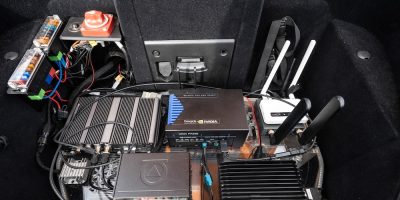
Arrow Electronics has designed a first-of-its-kind, AI-powered steering system. Powered by an advanced NVIDIA processor, it uses facial recognition technology to control the latest SAM (Semi-Autonomous Mobility) Car.
Quadriplegic racecar driver Sam Schmidt recently drove at competitive speeds using the new system that he steers through head motions. Arrow engineers developed the new steering system using the latest NVIDIA Jetson AGX Orin module, the only platform capable of delivering the high accuracy and low latency needed to control a car at speeds up to 213 mph.
A low-profile stereo camera pair located on the dash captures Schmidt’s movements in real time and feeds the data to the NVIDIA module. Using machine learning, the system processes the information and adjusts the steering angle automatically – within a few thousandths of a second.
The new AI steering replaces the car’s original four-camera steering that used an older, infrared motion-capture based technology.
“With the AI, it’s more controllable,” said Schmidt. “There’s no lag. It’s instantaneous for high speed.”
The steering enhancements could have everyday applications far beyond the racetrack. The technology could be used to control vehicles and large equipment in settings as different as farming, warehouses, public transit and construction so the operator – physically disabled or not – could perform multiple tasks.
“The SAM Car has evolved into a technology platform that really personifies enabling the benefit of technology for as many people as possible,” said Murdoch Fitzgerald, Arrow vice president of global engineering and design services.
Infineon introduces power system reliability modelling
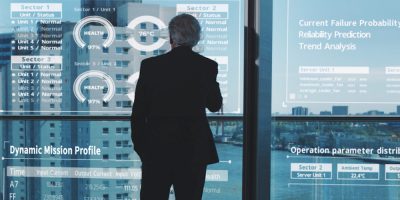
Infineon has introduced Power System Reliability Modelling, an innovative solution addressing the increasing challenges faced by data centres and telecom infrastructures due to power supply failures in the system. With 39 percent of downtimes attributed to power outages and an average cost of $687,700 per downtime, the need for seamless operations and mitigation of financial impact is urgent. By integrating Infineon’s power monitoring solution, organisations can enhance operational resilience, reduce their carbon-footprint and achieve substantial cost savings. The offering consists of an algorithm running on a digital power controller, thus integrating software and hardware. This is in line with Infineon’s strategic approach to provide customers with comprehensive system solutions that include both semiconductor devices and matching software tools. Target applications of the solution include DCDC converters, ACDC rectifiers and IBC modules utilised in data centres, AI servers, GPUs, and telecom networks.
Power System Reliability Modelling acts as a bridge between component and system reliability. It enables real-time power supply health monitoring of the system and lifetime estimation based on dynamic system operating parameters, a power supply system model, and a reliability prediction procedure in digital power controllers by Infineon. This solution ensures improved device utilisation and data-driven maintenance recommendations, translating into enhanced profitability and reduced Total Cost of Ownership (TCO). Customers benefit from real-time system diagnostics for their power supply as well as powerful system reliability-based decisions and quality assurance. The solution is easy to use and integrate into existing designs.
About Smart Cities
This news story is brought to you by smartcitieselectronics.com, the specialist site dedicated to delivering information about what’s new in the Smart City Electronics industry, with daily news updates, new products and industry news. To stay up-to-date, register to receive our weekly newsletters and keep yourself informed on the latest technology news and new products from around the globe. Simply click this link to register here: Smart Cities Registration