
NoC IP combines with AI package for neural networking

Commercial interconnect IP from Arteris IP, is claimed to accelerate the development of next-generation deep neural network (DNN) and machine learning systems. The FlexNoC version 4 interconnect IP and the companion AI Package. FlexNoC 4 and the AI Package (FlexNoC 4 AI) implement new technologies that ease the development of today’s most complex AI, deep neural network (DNN), and autonomous driving SoCs, explains Arteris.

Arteris IP created the new technologies in FlexNoC 4 AI based on its learning from customers, including Mobileye, which recently licensed Arteris IP FlexNoC and Ncore interconnect IP for its next-generation EyeQ systems.

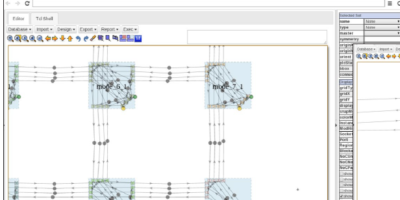
Using automated topology generation for mesh, ring and torus networks, the FlexNoC 4 AI enables SoC architects to generate AI topologies automatically and also edit generated topologies to optimise each individual network router, if desired.

The FlexNoC 4 AI intelligent multicast optimises the use of on-chip and off-chip bandwidth by broadcasting data as close to network targets as possible. This allows for more efficient updates of DNN weights, image maps and other multicast data.

Another feature, source synchronous communications, helps avoid clock tree synthesis, physical placement, and timing closure problems when spanning long distances on AI chips, which can be larger than 400mm2.

The VC-Link virtual channels allow long physical links to be shared in congested areas of the die while maintaining quality of service (QoS).

There is also support for HBM2 and multichannel memory and for up to 2048-bit wide data.

The FlexNoC 4 interconnect IP and the FlexNoC 4 AI Package are available immediately.

Arteris IP provides network in chip (NoC) interconnect IP to accelerate SoC semiconductor assembly for a range of applications from artificial intelligence (AI) to automobiles, mobile phones, IoT, cameras, SSD controllers, and servers. Its customer base include Samsung, Huawei, HiSilicon, Mobileye and Texas Instruments. The IP product line can help customers obtain lower power, higher performance, more efficient design reuse and faster SoC development, to lower development and production costs.

http://www.arteris.com

> Read More

HiFi DSP boosts audio and neural network processing

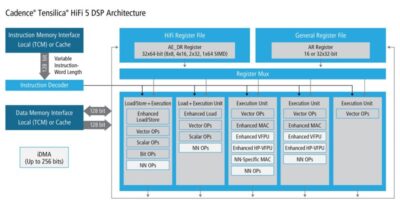
The first DSP optimised for speech and audio processing, the Tensilica HiFi 5 is the fifth generation HiFi DSP from Cadence. It is the first IP core optimised for high-performance far-field processing and artificial intelligence (AI)-based speech recognition processing, according to Cadence. This version of the HiFi DSP offers two times audio processing and four time neural network (NN) processing improvements compared with the earlier HiFi 4 DSP. The device can be used for voice-controlled user interfaces in digital home assistants and automotive infotainment.

Advanced DSP algorithms are rapidly evolving to eliminate noise and isolate the speakers’ voice for increased understanding, requiring higher processing capabilities and improved energy efficiency. At the same time, NN-based speech recognition algorithms are performing more tasks locally, rather than in the cloud, due to concerns of latency, privacy and network availability.

The DSP includes five very long instruction word (VLIW)-slot architecture capable of issuing two 128-bit loads per cycle. There is also twice the MAC capability of the HiFi 4 DSP for pre- and post-processing, including support for eight 32 x 32-bit or 16 16 x 16-bit MACs per cycle, optional eight single-precision floating-point MACs per cycle, four times MAC capability, compared with the HiFi 4 DSP, for NN processing.

The HiFi NN library offers an optimised set of library functions commonly used in NN processing (especially speech). These library functions can easily be integrated into popular machine learning frameworks.

The DSP also has software compatibility with the complete HiFi product line totalling over 300 HiFi-optimised audio and voice codecs and audio enhancement software packages.

This news story is brought to you by softei.com, the specialist site dedicated to delivering information about what’s new in the electronics industry, with daily news updates, new products and industry news.

To stay up-to-date, register to receive our weekly newsletters and keep informed of the latest technology news and new products from around the globe. Simply click this link to register here:  softei.com

Readers can also register to receive the monthly newsletter from our sister site, weartechdesign.com. This is the only website dedicated to developers of wearable electronic products. Simply click this link to register: weartechdesign.com

We have a Fitbit to give away on both Softei.com and Weartechdesign.com! Register today to enter the competition to win a Fitbit at softei.com or weartechdesign.com.

https://www.cadence.com

> Read More

600V GaN FET supports applications up to 10kW

Claimed to double power density in industrial and telecomms applications, the LMG341x family of high-voltage GaN FETs has been announced by Texas Instruments.

The 600V GaN FETs of 50 and 70-mOhm power stages support applications from sub 100W to 10kW. The FETs enable designers to create smaller, more efficient and higher-performing designs compared to silicon FETs in AC/DC power supplies, robotics, renewable energy, grid infrastructure, telecomms and personal electronics applications.

The LMG341x family devices provide an alternative to traditional cascade and standalone GaN FETs by integrating functional and protection features to simplify design, says TI. This enable greater system reliability and optimisation of the performance of high-voltage power supplies. With integrated current limiting of up to 100 nanoseconds and over-temperature detection, the devices protect against unintended shoot-through events and prevent thermal runaway. System interface signals enable a self-monitoring capability.

TI’s integrated GaN power stage doubles power density and reduces losses by 80 per cent compared to silicon MOSFETs, explains TI. Each device is capable of fast, 1MHz switching frequencies and slew rates of up to 100V/nanoseconds.

The family of GaN FETs is backed by 20 million hours of device reliability testing, including accelerated and in-application hard switch testing.

The LMG3410R050, LMG3410R070 and LMG3411R070are available now in 8.0 x 8.0mm split-pad, quad flat no-lead (QFN) packaging.

Visitors to the Texas Instruments stand C4-131 at electronica (13 – 16 November at Messe Munchen, Germany) will see a 10kW cloud-enabled grid link demonstration, jointly developed by TI and Siemens. The demonstration uses TI’s LMG3410R050 600V GaN FET with integrated driver and protection, enabling engineers to achieve 99 per cent efficiency and up to 30 per cent reduction in power component size compared to a traditional silicon design.

Texas Instruments is a semiconductor design and manufacturing company that develops analogue integrated circuits (ICs) and embedded processors.

http://www.TI.com

> Read More

Farnell element14 adds Symbisa IoT deployment and data monitoring

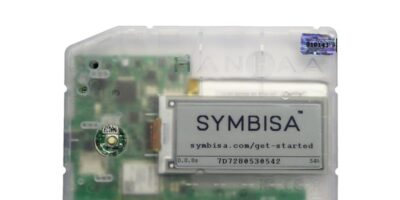
Combining hardware, mobile connectivity and easy access to data to make the IoT accessible, Hanhaa’s Symbisa is an Excel-integrated IoT device that is now available from Farnell element14.

The Symbisa module is an all-in-one, always-connected device, approximately the size of a smartphone, that carries sensors capable of detecting and collecting environmental information including GPS location, orientation, temperature, light and humidity. Typical applications include the monitoring of temperature and humidity of greenhouses or storage areas, or tracking equipment on hire, including whether it has been in an accident or dropped in transit.

Based on Microsoft Excel and with an Excel add-in, it enables users to bring real-world data streams directly into any desktop or mobile device that runs Excel for Office 365. Each Symbisa sensor is associated with a custom function in Excel, as are pre-configured events, meaning sensor data flows directly into Excel worksheet cells.  Users can also push data from Excel up to a unit’s e-ink display.  It can therefore be used by anyone with basic spreadsheet knowledge, says the company, to explore the possibilities of the IoT, interpreting sensor data, developing dashboards and triggering events that require follow-on actions in a matter of minutes – without coding, engineering capabilities, or a WiFi or network link-up.

Connectivity is through Hanhaa’s secure global mobile network which charges by how often data is captured rather than the amount of data used. Users can send messages or barcodes direct from Excel to be displayed on the e-ink display on the module, ready for a person or machine to read and action in the field.   

Key sensor parameters are location accuracy, with standard GNSS resolution down to three meters provided with the position dilution of precision (PDoP) parameter). Symbisa also detects shock up to ±16g, ambient light at 560nm and has a pressure sensing range of 260 to 1260 hPa and humidity sensing range of five to 90 per cent non-condensing. It operates at -15 to +50 degrees C.

The Symbisa board measures 130 x 100 x 10.5mm and weighs 160g and has quad band GSM radio for communications. Units also carry an e-ink display for text and/or barcode messaging, a battery sufficient for over two weeks’ standalone use, and a USB 2.0 connector for re-charging or hard-wired configuration.

Symbisa is exclusively available from Farnell element14 in Europe and Newark element14 in North America.

http://www.element14.com/symbisa

> Read More

About Smart Cities

This news story is brought to you by smartcitieselectronics.com, the specialist site dedicated to delivering information about what’s new in the Smart City Electronics industry, with daily news updates, new products and industry news. To stay up-to-date, register to receive our weekly newsletters and keep yourself informed on the latest technology news and new products from around the globe. Simply click this link to register here: Smart Cities Registration