
Archiving system incorporates AI and machine learning elements

Enhanced functions for radiologists, new collaboration tools and artificial intelligence (AI) integration are provided in the latest Telemis Multimedia Archiving and Communication System (MACS).

Version 4.90 of Telemis’ archiving and transmission platform is future-proofed for machine learning (ML) and adds advanced capabilities for diagnosis and collaboration.

Telemis-Medical Version 4.90 also simplifies the capture, storage, comparison and sharing of key diagnostic data through improved image registration functionalities, says Telemic, with the introduction of goniometry tools and enhanced collaboration options. The software also offers integration modules that will speed the incorporation of new and emerging AI and ML techniques.

The latest version of MACS was been developed with a focus on addressing the challenges facing today’s radiologists. Recognising that image comparison is a significant portion of a radiologist’s work, Telemis has developed registration capabilities that allow alignment and comparison between images whatever the modalities (CT/MR/PT), the table positions and the timespan between the series. There are optional report input tools that combine advanced image viewing, dictation management and voice recognition, to simplify and speed up the collection, recording and analysis of radiology measurements.

Medical images can be now captured by peripherals such as smartphones and tablets and then automatically linked with the patient ID and the user ID via scan barcodes and QR codes. These more flexible and faster features have been designed not only for medical facilities with multiple sites but also for emergency units, dermatologists and surgeons.

Telemis-Medical Version 4.90 includes a new feature, TM-Community, which facilitates exchanges between Telemis customers. It also includes TM-Publisher Web which supports the secure distribution of images to external professionals such as GPs and consultant physicians. The TM-Publisher Web tool includes a new uploader module that allows internal and external contacts to send DICOM or non-DICOM images for second opinions. For data exchange and GDPR compliance, the new audit system allows operators to centralise access control and management.

Telemis-Medical Version 4.90 offers modules that speed the integration of AI tools. The AI-Box is designed to harmonise the exchange processes between multimedia archiving and communications systems and AI algorithms, making it easier to use the best algorithm for a given pathology.

http://www.telemis.com

> Read More

AI computer holds promise for millions of intelligent systems

At this week’s GPU Technology Conference in San Jose, California this week, Nvidia has announced an artificial intelligence (AI) computer that makes it possible to create millions of intelligent systems.

There are two versions of the Nvidia CUDA-X Jetson Nano computer, a $99 development kit for developers and makers, and a production-ready module, priced at $129 for companies to create mass-market edge systems.

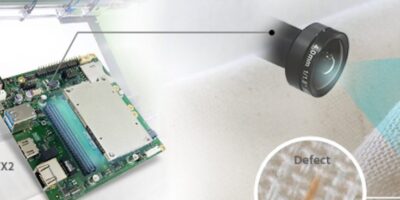
The small CUDA-X AI computer delivers 472GFLOPS of compute performance for running modern AI workloads and is power-efficient, consuming as little as 5W.

Jetson Nano supports high-resolution sensors, can process many sensors in parallel and can run multiple modern neural networks on each sensor stream. It also supports many popular AI frameworks, allowing developers to integrate preferred models and frameworks.

The Jetson Nano developer kit is priced to bring the power of modern AI to a low-cost platform, for makers, inventors, developers and students to build AI projects, for example mobile robots and drones, digital assistants and automated appliances.

The kit includes support for full desktop Linux and is compatible with many popular peripherals and accessories. Ready-to-use projects and tutorials are included to help makers get started with AI fast.

The Jetson Nano module can be used in embedded applications, including network video recorders, home robots and intelligent gateways with full analytics capabilities.

The design includes power management, clocking, memory and fully accessible input/outputs. The AI workloads are entirely software defined, allowing companies to update performance and capabilities even after the system has been deployed.

To help customers easily move AI and machine learning (ML) workloads to the edge, Nvidia has worked with Amazon Web Services (AWS) to qualify AWS Internet of Things Greengrass to run optimally with Jetson-powered devices such as Jetson Nano.

Nvidia CUDA-X is made up of over 40 acceleration libraries for graphics processing unit (GPU) -accelerated computing. JetPack SDK is built on CUDA-X and is a complete AI software stack with accelerated libraries for deep learning, computer vision, computer graphics and multimedia processing that supports all of the Nvidia Jetson family, including Jetson AGX Xavier for fully autonomous machines and Jetson TX2 for AI at the edge.

JetPack includes the latest versions of CUDA, cuDNN, TensorRT and a full desktop Linux OS.

A reference platform has also be created to minimise the time spent on initial hardware assembly.

http://www.nvidia.com

> Read More

Arrow Electronics Joins Siemens’ MindSphere Partner Program to Extend its Industrial IoT Offering

Arrow Electronics announced today that it has joined the MindSphere Partner Program, Siemens’ program for industrial IoT solution and technology providers.

MindSphere is the cloud-based, open IoT operating system from Siemens that connects products, plants, systems and machines, enabling businesses to harness the wealth of data generated by the IoT with advanced analytics. As a MindSphere Platinum Partner, Arrow has multiple technical staff trained by Siemens through the MindSphere technical curriculum, a variety of MindSphere applications in development, and a joint go-to-market agreement to assist customers in achieving substantial business value through IoT technology generally and MindSphere specifically.

Arrow’s broad portfolio of products, services and expertise enables it to address every layer of an IoT solution stack, ranging from electronic components to IT solutions. Arrow provides coverage from the edge to end-of-life, including: sensors, connectivity, cloud, analytics, security, IT infrastructure, and asset disposition. IoT solutions providers can benefit from these and other services delivered by Arrow, such as remote management and monitoring, design and integration, as well as the digital transformation solutions offered by Arrow subsidiary eInfochips.

As a member of the Siemens MindSphere Partner Program, Arrow can offer market-ready solutions including Retrofit – which enables companies to integrate old industrial equipment with the new – smart city and end-to-end asset tracking. These, together with analytics services, help to keep the barriers to starting a new project low.

Aiden Mitchell, vice president of IoT global solutions, Arrow Electronics, said, “This arrangement with Siemens enables us to offer our customers leading industrial IoT solutions to solve their digital transformation challenges across their manufacturing enterprises. Arrow is well positioned to initiate and orchestrate all stages of industrial IoT projects, including hardware, software and technical – as well as business – services.”

Paul Kaeley, senior vice president, global partner ecosystem, Siemens PLM Software, said, “Arrow’s vision of IoT, “From Sensor to Sunset,” fits perfectly with the transformative business opportunities of introducing Siemens’ MindSphere IoT operating system into client environments. This offers complete solutions enabling businesses to deploy and manage secure pre-connected intelligent sensors and high-end devices throughout their entire lifecycle globally.”

Arrow will have a presence in the MindSphere Lounge at the Hanover Fair (Hall 9) where it will showcase the breadth of the company’s Industrial IoT offering.

Detailed information about Arrow’s operations can be found by visiting www.arrow.com

> Read More

AI computer holds promise for millions of intelligent systems

At this week’s GPU Technology Conference in San Jose, California this week, Nvidia has announced an artificial intelligence (AI) computer that makes it possible to create millions of intelligent systems.

There are two versions of the Nvidia CUDA-X Jetson Nano computer, a $99 development kit for developers and makers, and a production-ready module, priced at $129 for companies to create mass-market edge systems.

The small CUDA-X AI computer delivers 472GFLOPS of compute performance for running modern AI workloads and is power-efficient, consuming as little as 5W.

Jetson Nano supports high-resolution sensors, can process many sensors in parallel and can run multiple modern neural networks on each sensor stream. It also supports many popular AI frameworks, allowing developers to integrate preferred models and frameworks.

The Jetson Nano developer kit is priced to bring the power of modern AI to a low-cost platform, for makers, inventors, developers and students to build AI projects, for example mobile robots and drones, digital assistants and automated appliances.

The kit includes support for full desktop Linux and is compatible with many popular peripherals and accessories. Ready-to-use projects and tutorials are included to help makers get started with AI fast.

The Jetson Nano module can be used in embedded applications, including network video recorders, home robots and intelligent gateways with full analytics capabilities.

The design includes power management, clocking, memory and fully accessible input/outputs. The AI workloads are entirely software defined, allowing companies to update performance and capabilities even after the system has been deployed.

To help customers easily move AI and machine learning (ML) workloads to the edge, Nvidia has worked with Amazon Web Services (AWS) to qualify AWS Internet of Things Greengrass to run optimally with Jetson-powered devices such as Jetson Nano.

Nvidia CUDA-X is made up of over 40 acceleration libraries for graphics processing unit (GPU) -accelerated computing. JetPack SDK is built on CUDA-X and is a complete AI software stack with accelerated libraries for deep learning, computer vision, computer graphics and multimedia processing that supports all of the Nvidia Jetson family, including Jetson AGX Xavier for fully autonomous machines and Jetson TX2 for AI at the edge.

JetPack includes the latest versions of CUDA, cuDNN, TensorRT and a full desktop Linux OS.

A reference platform has also be created to minimise the time spent on initial hardware assembly.

http://www.nvidia.com

> Read More

About Smart Cities

This news story is brought to you by smartcitieselectronics.com, the specialist site dedicated to delivering information about what’s new in the Smart City Electronics industry, with daily news updates, new products and industry news. To stay up-to-date, register to receive our weekly newsletters and keep yourself informed on the latest technology news and new products from around the globe. Simply click this link to register here: Smart Cities Registration