
Sfera Labs Introduces SuperCaps UPS Expansion Board for Strato Pi Max

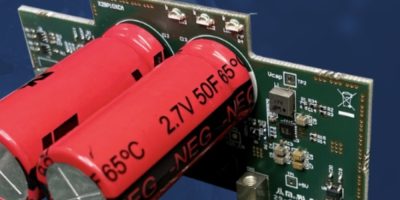
Sfera Labs has released the new SuperCaps UPS X2-Series Expansion Board, bringing integrated, supercapacitor-based backup power to its Strato Pi Max XL and XS servers.

The Strato Pi Max is based on the Raspberry Pi Compute Module 4 or 5, with a wide range of swappable expansion boards that adapt it to countless applications. With the addition of the SuperCaps UPS, the platform now gains built-in protection against power interruptions, ensuring continuous operation and safeguarding critical data.

The SuperCaps UPS expansion board integrates with the Strato Pi Max ecosystem and is particularly valuable in environments where short power outages are common, such as industrial automation systems, building management controllers, smart grids, and edge computing nodes, where even brief interruptions can cause downtime, loss of sensor data, or interrupted communication with the cloud. The expansion board also enables sending alerts when a power outage occurs, allowing remote monitoring systems to react quickly and prevent wider disruption. In applications like industrial databases or logging systems, the ability to perform a clean shutdown ensures data integrity and prevents corruption of critical files.

Unlike the existing UPS expansion board for Strato Pi Max, which requires an external lead-acid or AGM battery, the new SuperCaps UPS uses high-capacity supercapacitors directly integrated on the board. This results in a more compact, durable, and installation-friendly solution, eliminating the need for external cabling, bulky batteries, or periodic battery replacement.

With this launch, Sfera Labs further extends the flexibility of the Strato Pi Max ecosystem, giving engineers and system integrators a reliable tool for deploying resilient industrial, IoT, and edge computing solutions in the most demanding environments.
sferalabs.cc


> Read More

Morse Micro announces mass production of Wi-Fi HaLow SoC, modules, evaluation kit and HaLowLink 2

Morse Micro has announced the mass production and general availability of its second-generation MM8108 System-on-Chip (SoC). This milestone represents a major leap-forward for Wi-Fi HaLow, bringing data throughput at range, which will enable the next generation of IoT and Edge AI solutions.

The MM8108 Wi-Fi HaLow SoC, which delivers long-range Wi-Fi at speeds up to 43Mbps, is now in full-scale production. This milestone paves the way for a new generation of long-range, low-power IoT devices. Complementing the SoC’s rollout, Morse Micro has made available a series of its Evaluation Kits (EVKs):
● MM8108-EKH01, integrating Morse Micro’s MM8108 SoC with Broadcom’s BCM2711 SoC on a Linux-based Raspberry Pi 4 platform
● MM8108-EKH05, integrating Morse Micro’s MM8108 SoC with ST Microelectronics’s STM32U585 on a FreeRTOS-based IoT platform
● MM8108-EKH19, integrating Morse Micro’s MM8108 SoC on a USB-A dongle with GLi.net’s GL-MT3000 router with MediaTek’s MT7981B Wi-Fi 6 SoC

With the MM8108 entering mass production, module availability is rapidly expanding to meet growing customer demand. Morse Micro’s MM8108-MF15457 reference module is now available to the general public on Mouser.com, while AzureWave’s AW-HM677 module is available for high volume customers directly from AzureWave.

MOB-AH-8108 module is already available to support low- to mid-volume customer requirements, with full mass production scheduled for later this year. Similarly, Quectel’s modules are also scheduled for mass production later this year. This breadth of options ensures developers and OEMs have multiple pathways to integrate Wi-Fi HaLow and bring products to market faster.

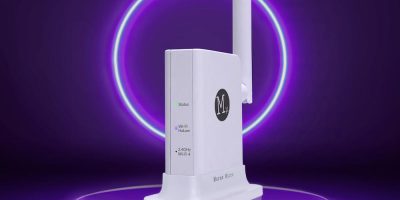
As part of this announcement, Morse Micro also unveiled its next-generation evaluation platform, HaLowLink 2. Building its HaLowLink 1, the new platform upgrades the core Wi-Fi HaLow SoC from MM6108 to the MM8108, delivering 43Mbps throughput at extended range thanks to 256QAM modulation rate and 26dBm internal PA on MM8108.

Designed to make Wi-Fi HaLow adoption faster and easier, HaLowLink 2 provides a powerful reference design that simplifies evaluation, prototyping, and deployment of Wi-Fi HaLow networks.

www.morsemicro.com

> Read More

e-con Systems expands camera support for Renesas’ new RZ/G3E

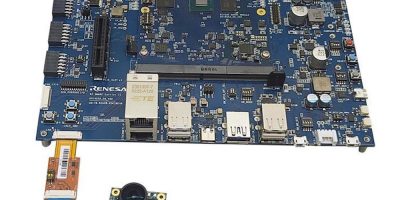
e-con Systems has announced camera support for Renesas’ latest RZ/G3E microprocessor, strengthening its partnership with Renesas in powering next-generation embedded vision applications such as industrial automation, smart city, automotive and more. Building on their integration with Renesas’ RZ/V2N and RZ/V2H processors, e-con Systems now brings its production-ready camera modules to the newly launched RZ/G3E microprocessor.

The RZ/G3E microprocessor, part of Renesas’ scalable MPU portfolio, is engineered for low-power edge computing and advanced graphics-rich and vision-based applications, offering dual-display support, secure connectivity, and a high-performance Arm Cortex-A55 processor.

As part of its RZ/G3E-compatible offerings, e-con Systems provides:
• e-CAM22_CURZH – Full HD ultra-low light colour camera with Sony STARVIS IMX462 sensor. This camera excels in capturing high-quality images in challenging lighting conditions.
• e-CAM25_CURZH – Full HD Global Shutter camera with onsemi AR0234 sensor. Its global shutter capability, combined with a 120 fps frame rate, minimises frame-to-frame distortion, ensures distortion-free imaging for fast-moving objects.

Both cameras are equipped with a built-in ISP (Image Signal Processor), fully aligned with Renesas’ integration requirements for RZ/G3E. These modules are compatible with the RZ/G3E evaluation kit, and they are available for immediate evaluation.

“The Renesas RZ/G3E MPU’s advanced edge computing and low-power features align perfectly with our camera technology, enabling developers to build reliable and high-quality AI vision systems that operate efficiently even in demanding scenarios. Our collaboration with Renesas continues to drive innovation across industrial automation, robotics, and smart surveillance markets.” said Suresh Madhu, Head of Industrial Business Unit at e-con Systems.

“The Renesas RZ/GE is developed to target intelligent edge computing integrated with full graphics and high-speed capabilities including an Arm Ethos-U55 neural processing unit,” said Daryl Khoo, Vice President, Embedded Processing Product Group at Renesas. “We expected this collaboration with e-Con will help customers in the Vision AI market to simplify their design in order to realize faster time to market.”

www.e-consystems.com


> Read More

Melexis enhances smart IVT hall and shunt sensors with external NTC input

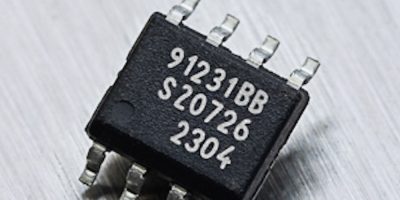
Melexis enhances its smart IVT (current, voltage & temperature) sensing platform by adding a negative temperature coefficient (NTC) resistor input capability to the MLX91230 (Hall-effect) and MLX91231 (shunt interface). This upgrade enables more precise external temperature measurement alongside existing junction readings, helping engineers to address the need for comprehensive monitoring in safety-critical applications.

The integration of the NTC input into the MLX91230 and MLX91231 sensors improves the detection of variations in system temperatures. For the MLX91231 (shunt interface) in particular, it offers an additional use case of compensating the shunt resistor’s residual variability over temperature, leading to a further increase of current sensing accuracy. Furthermore, the new NTC input is ASIL C compliant, allowing for deployment in safety-critical automotive applications, including automotive batteries, DC fast charging, smart pyro-fuses, and power distribution modules.

The new NTC input pin enables engineers to monitor and apply post-processing to the temperature of an external component using the same integrated circuit (IC) that performs current sensing. With this expanded functionality, current, voltage, and both junction and external NTC-based temperature are all measured through a single device, streamlining development and improving system reliability. Moreover, the ASIL C functional safety compliance to ISO 26262 applies to the current, voltage, and external NTC measurement, as well as the diagnosable overcurrent detection (OCD). The OCD also permits direct input to the pyro-fuse driver, enabling the simple deployment of smart pyro-fuses with fewer components.

These new features complement the already extensive functionality of the MLX91230 and MLX91231 sensors. Each device is equipped with a microcontroller unit (MCU) complete with onboard flash memory, facilitating the deployment of custom software and allowing for robust compensation of any system discrepancies. Furthermore, the LIN output option allows for simple integration with 12V battery applications and power distribution modules, while UART permits direct communication with the Battery Monitoring System (BMS) that is starting to find its way into the Battery Disconnect Unit (BDU). For remote BMS systems, UART-over-CAN can leverage a more robust physical layer while maintaining lower overhead layers above that characterise the point-to-point communication of the current sensor module to the BMS.

As well as vehicular deployments, the expanded capabilities of the new MLX91230 and MLX91231 will also benefit other high and low-voltage battery solutions, including Battery Energy Storage Systems (BESS), solar panel installations, and e-bikes, providing precise temperature monitoring for improved system management.

https://www.melexis.com/

> Read More

About Smart Cities

This news story is brought to you by smartcitieselectronics.com, the specialist site dedicated to delivering information about what’s new in the Smart City Electronics industry, with daily news updates, new products and industry news. To stay up-to-date, register to receive our weekly newsletters and keep yourself informed on the latest technology news and new products from around the globe. Simply click this link to register here: Smart Cities Registration