

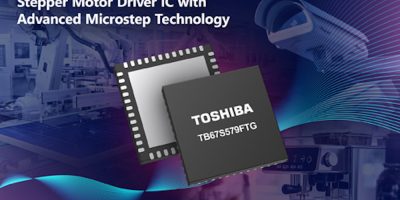
Toshiba launches stepper motor driver IC featuring next-gen Advanced Microstep Technology

Toshiba has launched the TB67S579FTG, a next-generation stepper motor driver IC featuring Advanced Microstep Technology. This two-phase, bipolar stepper motor driver employs a constant current control method. With its advanced functions, it achieves high efficiency, low vibration, and low noise in motor operation. Target applications include office equipment, such as printers and scanners, as well as a wide range of commercial and industrial equipment, including surveillance cameras, projectors, ATMs, 3D printers, sewing machines, and many more.

The high-efficiency stepper motor driver IC is Toshiba’s first product featuring the newly developed Advanced Microstep Technology, including three key functions: second-generation Active Gain Control (AGC2), the newly developed Automatic Wave Generation System (AWGS), and the newly developed Continuous Microstepping. Continuous Microstepping significantly reduces vibration and noise, especially during low-speed rotation, by creating a continuous, sinusoidal motor drive current waveform.

Typical microstep control methods require increasing the input clock (CLK) frequency in proportion to the number of microsteps. Automatic Wave Generation System (AWGS) is a function that enables driving a stepper motor in microstepping mode using a single CLK signal as required for full-step rotation control. Even in applications where a stepper motor is initially driven in full-step mode, to quickly generate torque and then switch to microstepping for lower vibration and noise, a smooth transition can be achieved without the need to adjust control signals. As a result, the processing load on control devices such as microcontrollers (MCUs) can be significantly reduced.

Generally, a stepper motor is continuously driven at the maximum current required under peak load conditions. Active Gain Control (AGC2) detects the induced voltage during motor operation to determine the load and automatically adjusts the required motor drive current. This mechanism enables the motor to operate with the minimum required current under light-load conditions, allowing for higher efficiency and, therefore, lower power consumption. AGC2 also improves the current waveform and torque by realising a ‘full’ full-step operation.

In addition to the conventional GPIO configuration interface, the TB67S579FTG offers a flexible serial configuration interface, enabling easy adjustment of advanced features such as microstepping, AGC2, and decay modes without increasing pin count or system complexity.

TB67S579FTG’s output stage (covering the upper and lower transistors) has an RDS(ON) of just 0.6Ω (typ.). When in sleep mode, the device draws a maximum current of 1A. To simplify system integration, the driver operates with a single motor power supply, ranging from 4.5V to 34V. The product also employs Toshiba’s Advanced Current Detection System (ACDS), eliminating the need for external current sense resistors. The built-in charge pump circuit does not require an external capacitor. Eliminating the need for these external components enables substantial space savings in the mounting area and reduces the bill-of-materials (BoM) cost.

Additional features include Advanced Dynamic Mixed Decay (ADMD), which can achieve up to 30% higher rotation speed without increasing noise and vibration. The driver IC also implements comprehensive protection functions, including overcurrent detection, thermal shutdown, under-voltage lockout, error flag output, and open-load and stall detection. The integrated stall detection function reliably identifies motor lock conditions, enhancing operational safety and preventing potential damage to mechanical components and electronics.
toshiba.semicon-storage.com

> Read More

Panasonic launches its first flat lens, high-performing PIR sensor

Panasonic Industry has announced the launch of its latest innovation in PIR motion sensors: the Flat Wide Detection Type (12 lens), being the first product incorporating the new PaPIRs+ technology.

Engineered for modern building automation, professional lighting control, and smart home markets, the Flat Wide Detection Type features a sleek, discreet flat lens that seamlessly integrates into any aesthetically demanding application. Its wide field of view of 136.4° × 135.4° maximises coverage, reducing the number of sensors needed and simplifying installation.

By redesigning the pyroelectric elements, PaPIRs+ delivers twice the sensitivity compared to PaPIRs series, enabling it to detect even small movements across a large area with exceptional accuracy. This advancement ensures reliable performance in diverse settings, from offices and schools to residential spaces.

Specifications of the new Flat Wide Detection Type PaPIRs+ sensor:
• Maximum coverage of ≈ Ø15 m at 3.0 m ceiling mounting height
• 416 detection zones providing gap-free motion detection
• Lens diameter: 32.6 mm
• Current consumption: four variants ranging from 1 µA to 170 µA
• Output interfaces: digital (open-drain) and analogue (op-amp)
• Operating temperature range: –20 °C to +60 °C
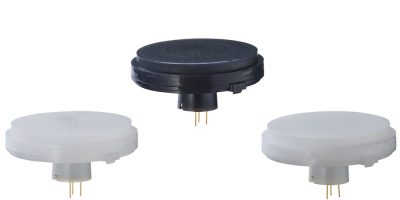
• Lens colour options: white, pearl white, and black
• Lens form factor identical to the High-Bay Aisle sensor: “Ultra-Wide and Long-Distance Detection Type (11-lens)”
• Lens design supports O-ring sealing for enhanced IP ratings

“Our new “Flat Wide Detection” sensor exemplifies the fusion of flat design with outstanding detection performance. Thanks to PaPIRs+ technology, it detects very small movements of not only moving but also sitting individuals across a large area, it is perfectly suited for applications in office environments, hotels, or public offices.” says Robert Spiegler, Lead Product Manager Industrial Sensors. “This sensor combines sleek, compact aesthetics with unparalleled sensitivity. It sets a new standard in product design and detection performance!”

The PIR sensor’s capabilities for tangential, radial and minor motion were extensively tested in Panasonic’s laboratories in Japan under standardised IEC63180 measurement and test norms. I

industry.panasonic.eu

> Read More

Infineon launches the next-generation of USB 2.0 peripheral controller

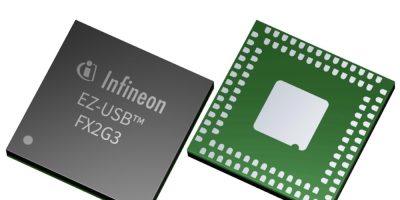
Infineon is introducing the EZ-USB FX2G3, a next-generation USB 2.0 peripheral controller designed to deliver superior performance, robust security, and advanced power efficiency for USB devices. This new controller builds on the EZ-USB FX2LP platform and offers a highly adaptable solution for industries requiring seamless and secure connectivity.

The demand for efficient and secure data transfer is driving innovation across industries, and USB technology plays a critical role in enabling this connectivity. EZ-USB FX2G3 controllers include Serial Communication Blocks (SCB), a crypto engine for enhanced security, and a high-bandwidth data subsystem that facilitates DMA data transfers from LVCMOS input to USB output at speeds up to 480 Mbps, suitable for USB Hi-Speed-based host systems. A 1024 KB SRAM is integrated within the high-bandwidth data subsystem to provide ample buffering for data.

EZ-USB FX2G3’s versatility enables it to seamlessly integrate into a variety of industries. In biometric systems, for example, the FX2G3 powers secure and fast fingerprint recognition or facial authentication, providing consumers with a convenient and secure way to access their devices. In medical and healthcare devices, the controller drives portable diagnostic tools, imaging systems, and patient monitoring, enabling healthcare professionals to provide more effective and efficient care. In industrial systems, the controller facilitates real-time data collection and communication in robotics and automation systems, improving productivity and efficiency. In consumer electronics, the controller’s speed and efficiency enhance gaming devices, audio peripherals, and other USB accessories, providing consumers with a more enjoyable and immersive experience. In robotics, EZ-USB FX2G3 supports sensor integration and advanced control, delivering high responsiveness in both industrial and consumer designs.

infineon.com

> Read More

Microchip expands PolarFire FPGA smart embedded video ecosystem

Microchip has expanded its PolarFire FPGA smart embedded video ecosystem to support developers who need reliable, low-power, high-bandwidth video connectivity. The embedded vision solution stacks combine hardware evaluation kits, development tools, IP cores and reference designs to help streamline development, strengthen security and accelerate time to market. The stacks include Serial Digital Interface (SDI) Receive (Rx) and Transmit (Tx) IP cores and a quad CoaXPress (CXP) board to support complete video pipelines for applications ranging from medical diagnostics and low-latency imaging to real-time camera connectivity for intelligent systems.

Microchip is currently the only known FPGA provider offering a quad CoaXPress FPGA-based solution, enabling direct SLVS-EC (up to 5 Gbps/lane) and CoaXPress 2.0 (up to 12.5 Gbps/lane) bridging without the need for third-party IP. SDI Rx/Tx IP cores deliver Society of Motion Picture and Television Engineers (SMPTE) compliant 1.5G, 3G, 6G and 12G-SDI video transport for broadcast and embedded imaging applications. Additionally, the ecosystem includes HDMI-to-SDI and SDI-to-HDMI bridging capabilities, supporting 4K and 8K video formats to enable high-resolution, high-bandwidth video transport across a range of professional and embedded applications.

By harnessing the ultra-low-power, secure, programmable, non-volatile architecture of PolarFire FPGAs, Microchip delivers integrated solution stacks that enable OEMs to create compact, fanless and high-performance video systems. The solutions are designed to help lower bill of material (BOM) costs, streamline design complexity and incorporate layered security across hardware, design and data using advanced anti-tamper protection and embedded security features.

“Next-generation medical, industrial and robotic vision systems demand not only exceptional video quality but also uncompromising energy efficiency,” said Shakeel Peera, vice president of marketing for Microchip’s FPGA business unit. “The expansion of our PolarFire FPGA embedded video ecosystem underscores our commitment to delivering low-power solutions that are designed to enable customers to develop reliable and high-performance systems with robust connectivity and minimised energy consumption.”

microchip.com

> Read More

About Smart Cities

This news story is brought to you by smartcitieselectronics.com, the specialist site dedicated to delivering information about what’s new in the Smart City Electronics industry, with daily news updates, new products and industry news. To stay up-to-date, register to receive our weekly newsletters and keep yourself informed on the latest technology news and new products from around the globe. Simply click this link to register here: Smart Cities Registration