

Secure virtualisation for NXP i.MX 8 and 8X processors protects critical systems

Green Hills Software has announced availability of its Integrity Multivisor secure virtualisation for NXP Semiconductors’ i.MX 8 and 8X applications processors. Using the certified separation architecture of the Integrity real-time operating system (RTOS) and its Multivisor secure virtualisation technology, manufacturers of critical automotive and industrial systems can, for the first time, run consumer operating systems in secure partitions alongside critical software applications on the same i.MX 8 processor, says Green Hills.

Manufacturers can consolidate Linux, Android and AUTOSAR with critical software on the same i.MX 8-based platform to design a scalable, mixed-criticality platform and with low, mid and high-end feature sets. The consolidation reduces hardware costs and simplifies software complexity, adds Green Hills.

Integrity and Integrity Multivisor are integrated with Green Hills Software’s advanced ASIL D/SIL 4 qualified development tools featuring the industry-leading C/C++ compilers, Multi integrated development environment, TimeMachine backward execution trace debugger, and MISRA C Adherence Checker. Software developers can use advanced tools to extract maximum performance from the i.MX 8 processors and reduce the time and cost to debug and test software. For example, the Multi debugger provides the programmer a time-synchronised and unified view and control of the many execution levels in a consolidated Linux system: Linux applications, Linux kernel and drivers, real-time applications, RTOS kernel and virtual machine monitor. In contrast, says Green Hills, competing debuggers require a patchwork of different and disconnected debugging setups from several different vendors.

The Integrity RTOS and Multivisor platform for NXP i.MX 8 and 8X families of applications processors includes support for secure virtualisation and separation technology. This allows ISO 26262 and IEC 61508-certified applications to co-exist with general-purpose code or guest operating systems. It also allows accelerated hardware virtualisation leveraging the Arm architecture virtualisation extension.

It also supports accelerated 3D graphics using i.MX 8 graphics processing unit (GPU), and the capability to share the GPU between the host RTOS and multiple guest operating systems, while ensuring the RTOS graphics applications have priority for meeting functional safety requirements.

Integrity and its set of integrated software and hardware tools for the NXP i.MX 8 and 8X families are used by customers today. Integrity Multivisor for the i.MX 8 and 8X is available today to early access customers.


http://www.ghs.com

> Read More

Encapsulated simple digital power modules offer power density and efficiency

Renesas Electronics Corporation has launched a family of encapsulated digital DC/DC PMBus power modules.

The five RAA210xxx simple digital power modules offer advanced digital telemetry and performance, and are as easy to use as Renesas’ analogue power modules, says the company

The modules are complete step-down regulated power supplies that deliver 25A, 33A, dual 25A, 50A, and 70A of output current, while operating from industry-standard 12V or 5V input power rails.

The RAA210xxx family provides point-of-load conversion for advanced FPGAs, DSPs, ASICs and memory used in servers, storage, optical networking and telecom equipment.

Each device integrates a PWM controller, MOSFETs, inductor and passives inside a thermally optimised, high-density array (HDA) encapsulated module. All that is needed to complete the power supply are input and output bulk capacitors.

The RAA210xxx series is pin-to-pin compatible with Renesas’ full-featured digital ISL827xM series. The digital power modules offer run-time digital programmability to support configuration changes with a subset of PMBus commands, and full telemetry and system monitoring.

If more advanced digital control is later required, upgrading to the pin-compatible ISL827xM modules will enable current sharing with multiple modules connected in parallel, access to all PMBus commands using the PowerNavigator tool and non-volatile memory for configuration storage.

“Our simple digital power modules accelerate time to market for design teams that want an easier-to-use, lower-cost digital power solution,” said Philip Chesley, vice-president of industrial analogue and power business division, Renesas Electronics Corporation.

The proprietary HDA package offers electrical and thermal performance at full load through a single-layer conductive package substrate that efficiently transfers heat from the module to the system board, and dissipates it without requiring airflow or heatsinks.

Space-constrained boards take full advantage of the HDA’s high-power density, which is not achievable with discrete components.

The modules leverage Renesas’ ChargeMode control architecture that delivers up to 96 per cent peak efficiency and better than 90 percent efficiency under most conditions, says the company.

They also provide single-clock-cycle fast transient response to output current load steps, which reduces capacitance and helps save on board space.

http://renesas.com

> Read More

Bi-directional synchronous buck-boost controllers smooth path for industrial power

Two bi-directional four-switch synchronous buck-boost controllers from Renesas are believed to be the industry’s only true bi-directional controllers that sense peak current at both ends and provide cycle-by-cycle current limit in both directions while in buck or boost mode.

The ISL81601 and ISL81401 controllers generate point-of-load (PoL) and voltage rail conversions with peak efficiency up to 99 per cent. The ISL81601 has an input range of 4.5 to 60V and produces a 0.8 to 60V output to support most industrial batteries, namely 12, 24, 36 and 48V.

The ISL81401 is a 4.5 to 40V input and 0.8 to 40V output version, and its unidirectional counterpart is the ISL81401A. The controllers are suitable for DC power back-up and battery-powered medical, industrial and telecommunications systems.

According to Renesas, the ISL81601 and ISL81401’s bidirectional peak current sensing capability eliminates complex external circuitry required for charging and discharging a battery to supply power to the loads. A proprietary algorithm provides smooth mode transitions between buck, boost and buck-boost, while reducing low frequency ripple at Vout, ensuring minimal disturbances during line or load transients. The algorithm also ensures predictable ripple voltage under all conditions. Multi-layer overcurrent protection and a precision control algorithm deliver constant current down to 0.1V at Vout for reliable operation. Designers can expand system power by paralleling an unlimited number of controllers, says Renesas. The ISL81601 and ISL81401 operate two switches at a time to minimise power loss and achieve higher efficiency.

“Our new bidirectional buck-boost controllers eliminate extra sensing circuitry and offer customers a robust feature-set that maintains battery health and superior power utilization,” said Philip Chesley, Vice President of Industrial Analog and Power Business Division, Renesas Electronics Corporation. “Leveraging Renesas’ proprietary modulation scheme and algorithms allows the highly integrated ISL81601, ISL81401 and ISL81401A to achieve the high reliability performance required for battery-powered equipment.”

The ISL81601 and ISL81401/A can be combined with a Renesas RL78 microcontroller (MCU), or other MCUs, to program the voltages, battery charge/discharge function, and on-the-fly bidirectional power flow. Designers can also use the PowerCompass tool to help them quickly identify other power supply parts that match their specific system requirements. Multiple power rails can be set up and designers can perform high-level system analysis and generate custom reference design files in minutes.

All three controllers and evaluation boards are available now. The ISL81601 bidirectional 60V synchronous buck-boost controller is available in a 38-lead HTSSOP package and a 32-lead QFN package. The ISL81401 bi-directional and ISL81401A uni-directional synchronous 40V buck-boost controllers are available in 32-lead QFN packages.

http://www.renesas.com

> Read More

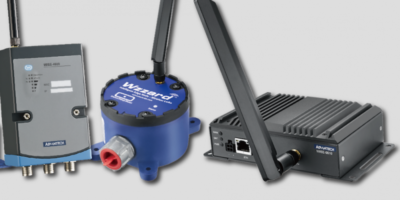
WAN nodes are rugged for intelligent industrial sensing

Two nodes from Advantech, the Wise-6610 LoRaWAN gateway and Wzzard LRPv2 LoRa WAN node have been designed to meet the increasing demand for intelligent monitoring and warning systems. Advantech says replacing or rewiring existing devices, which are often installed in remote areas or harsh environments, can be difficult and that it is critical that any wireless data communication solution has a rugged enclosure and flexible software design.

Wzzard LRPv2 Node is an integrated LoRaWAN sensing platform for applications ranging from I/O sensor data management to network protocol conversion. It can be used to form a private sensor network, and immediate reduces maintenance costs while increasing overall productivity, claims Advantech.

The Wise-6610 LoRaWAN gateway connects to a user’s application server or SCADA for data access using the MQTT protocol.

The Wzzard LRPvw node and WISE-6610 LoRa WAN gateway support long-range WAN communication, and there is no need to pay additional telecommunication costs, which can reduce costs considerably, adds Advantech.

The Wzzard LRPv2 node can connect up to four sensors simultaneously and is intended for production lines that have many sensors, or for applications where there is limited space for additional devices. The software is specifically designed to be customisable so as to accommodate the most sophisticated of monitoring plans, says the company.

The Wzzard LRPv2 node’s flexibility in both hardware and software frees users from having to deploy an infrastructure-heavy wireless network, meaning that resources can be allocated to other, more critical, investments.

The Wzzard LRPv2 node has two modes: sleep mode (for when the node is idle) and operation mode (for data transmission). It comes with an embedded alarm system to notify users when a threshold has been exceeded so that action can be taken.

Both devices have an IP66-rated enclosure and are protected against ingress from dust and powerful water jets. Their dual-power design (BC/battery for the Wzzard LRPv2 node) provides multiple deployment options, adds the company.

http://www.advantech.com

> Read More

About Smart Cities

This news story is brought to you by smartcitieselectronics.com, the specialist site dedicated to delivering information about what’s new in the Smart City Electronics industry, with daily news updates, new products and industry news. To stay up-to-date, register to receive our weekly newsletters and keep yourself informed on the latest technology news and new products from around the globe. Simply click this link to register here: Smart Cities Registration