

Rutronik adds Intel’s latest desktop workstation processors

Adding the Intel Xeon W-3400 and W-2400 (code-named Sapphire Rapids) to its processor portfolio, Rutronik Elektronische Bauelemente offers the desktop workstation processors for high-end computing. The Sapphire Rapids processors have new computing architecture, faster cores, and a new embedded multi-die interconnect bridge (EMIB) package.

The Sapphire Rapids processors offer scalability for increased performance with support for DDR5 RDIMM, PCIe Gen 5.0 and Wi-Fi 6E for the increased demands expected with future computing workloads. Developers and data science experts in particular will benefit from the powerful performance, said Rutronik.

The Intel Xeon W-3400 and W-2400 desktop workstation processors are available with up to 24 cores and 64 threads (Xeon W-2400) or 56 cores and 112 threads (Xeon W-3400) on a single chip. They feature a redesigned memory controller and a larger L2 cache as well as the L3 Shared Intel Smart Cache with up to 105Mbyte. The flagship of the series, the Intel Xeon w9-3495X, is the most powerful desktop workstation processor Intel has developed to date. It offers performance improvements of up to 28 per cent single-thread and up to 120 per cent multi-thread compared to the previous generation. In addition, operating frequencies of up to 4.8GHz with the Intel Turbo Boost Max Technology 3.0 to handle the challenges posed by constantly increasing computing power.

The processors also have an increased L2 cache and shared L3 Intel Smart Cache (up to 105Mbyte), Intel third generation Deep Learning Boost (AVX-512 support), support for select Intel vPro Enterprise technology, comprehensive overclocking support for unlocked processors – including the industry’s first DDR5 XMP 3.0 RDIMM memory overclocking capabilities, operating frequencies up to 4.8GHz and Intel Turbo Boost Max Technology 3.0.

Target applications are in media and entertainment, particularly for the creation of 3D scenes, video effects, or game development.

They are also suitable for engineering (CAD, CAE, AEC, simulation), where they can be used for product design, architectural design, product development and analysis, and product visualisation. In scientific computing and artificial intelligence development, the Intel Xeon W-3400 and W-2400 processors support data science, scientific computing, or machine learning / deep learning.
http://www.rutronik24.com 

> Read More

Farnell stocks Analog Devices’ low power real time clock 

Accessed through an I2C serial interface, the MAX31331 is a low power, real time clock (RTC) time keeping device from Analog Devices, which is now available from Farnell. 

The MAX31331 supports a wide range of 32.768kHz crystals and is accessed through an I2C serial interface. It consumes nominal 65nA time-keeping current, extending battery life, making it suitable for battery-powered and portable devices, including, wearables, medical devices and IoT nodes. The MAX31331 includes an automatic switch reverting to a back up supply in the event of a power failure, ensuring accurate timekeeping even in adverse conditions.

It is compact, with a small footprint of 1.66 x 1.26mm for use where space is limited. For ease of use, there are timestamps for various events, low battery voltage detection, 1/128 second register and alarms and countdown timer

The MAX31331 can be purchased from Farnell in EMEA, Newark in North America and element14 in APAC. 

Farnell has over 80 years’ experience in the high service distribution of technology products and solutions for electronic system design, production, maintenance and repair. It supports its broad customer base, from hobbyists to engineers, maintenance engineers and buyers, working with leading brands and start-ups to develop new products for market, and supporting the industry as it seeks to develop the current and next generation of engineers.  

Farnell trades as Farnell in Europe; Newark in North America; and element14 throughout Asia Pacific and sells direct to consumers through a network of resellers and its CPC business in the UK.

Farnell is a business unit of Avnet, a global technology solutions provider with an extensive ecosystem that delivers design, product, marketing and supply chain expertise for customers at every stage of the product lifecycle. 

http://www.farnell.com 

> Read More

RDK3 baseboard provides proof of concepts for IoT

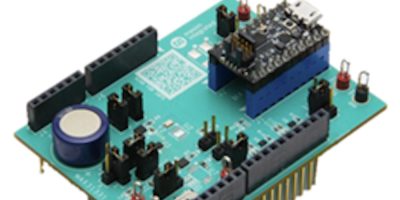
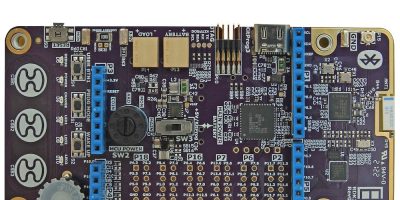
Rutronik System Solutions has developed the RDK3 baseboard, designed for engineers developing their own proof-of-concepts for Bluetooth connectivity. It shortens time-to-market for a variety of IoT applications, including advanced robotics, smart buildings, smart factories and healthcare. 

It features Infineon’s PSoC 64 secured microcontroller, enabling the implementation of security features. There is also the ability to integrate Rutronik System Solutions’ software into Infineon’s ModusToolbox.

Advanced robotics, smart buildings and factories and healthcare applications require wireless, intelligent networking of individual elements or work processes. Networked systems allow work steps and objects to be intelligently connected and interact with each other, explained Rutronik, for efficiency gains. The RDK3 baseboard is for wireless, low power Bluetooth connections with high security standards and low power consumption, said the company. It enables hardware and firmware developers to reduce time and costs in the pre-development phase and makes a significant contribution to bringing new applications much faster to market.

The RDK3 relies on Infineon’s PSoC 64 secured microcontroller with a Platform Security Architecture (PSA). The dual-core microcontroller features three-level hardware and firmware-based isolation. The Arm Dual-Cortex M-Core SoC provides a secure M0+core and performs all security functions. It is physically separated from the user applications running in parallel on the Arm Cortex-M4 core, with the main functions to build and authenticate secure applications the responsibility of the base board. 

The RDK3 has Arduino interfaces and is easy to combine with other adapter boards like HMS Anybus, Text To Speech, RAB1, and RAB2. In addition, all components used are from Rutronik’s product portfolio, ensuring the availability of all parts.

Rutronik Elektronische Bauelemente was founded in 1973 and is an independent family-owned company based in Ispringen, Germany. Today it is one of the world’s leading broadline distributors with more than 1,800 employees and serving over 40,000 customers. It has more than 80 offices worldwide and logistics centres in Austin (Texas), Shanghai, Singapore, and Hong Kong, for customer support in Europe, Asia, and North America.

http://www.rutronik.com

> Read More

Farnell takes a global view for ams-Osram

Optical products for automotive, consumer, industrial and healthcare products by ams-Osram are available from Farnell.

New proximity, temperature and vital sign monitoring sensors and a comprehensive range of LEDs, photodiodes and infrared (IR) emitters by ams-Osram are available from Farnell. 

The manufacturer has extended its distribution agreement with Farnell to offer optical products for sensing, visualisation and lighting applications from a single source. 

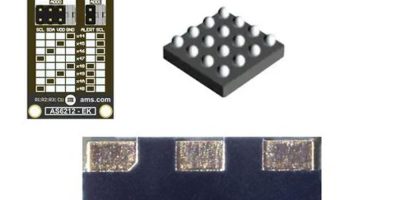
The enhanced range of solutions from ams-Osram available for fast delivery from Farnell includes the AS621X series of temperature sensors which are claimed to deliver the industry’s best combination of accuracy and low power consumption in a tiny wafer-level package. It is suitable for a range of consumer electronic devices and wearables, heating, ventilation and air conditioning (HVAC) systems and health-related monitoring systems. The series consists of three models, including AS6212, AS6214 and AS6218, providing measurement with different temperature accuracies and low power consumption, said Farnell. The compact size of each sensor ensures ease of integration and can feature up to eight different I²C addresses, which permits eight AS6221T devices to be used on one bus with no calibration or linearisation needed. 

The TMD3725 light, colour and proximity sensor offers reduced power consumption with design flexibility for dark room or full sunlight operation. Key features include advanced proximity measurement, colour sense (RGBC+IR) and digital ambient light sensing. The senor also compensates for unwanted IR energy system crosstalk reflection and undesirable ambient light photodiode current. The slim module incorporates an IR LED and factory calibrated LED driver with RGB + IR filters, high sensitivity down to mLux levels, a 1M:1 dynamic range and 0.18 micron processing technology with 1.8V I²C. The MD3725-EVM evaluation kit for the TMD3725 sensor provides everything required to evaluate the sensor.

There is also the TMD27553M ambient light / proximity photo sensor is optimised for narrow bezel mobile phones and offers industrial design flexibility, said Farnell. It has accurate ambient light sensing, superior proximity sensing and reduced power consumption. The proximity detection feature includes object recognition using photodiode detection of reflected IR energy (sourced by the integrated VCSEL). Detect and release events are interrupt driven and occur when the proximity result crosses the upper and / or lower threshold settings. The proximity engine features a wide range offset adjustment to compensate for unwanted IR energy reflection at the sensor. Moreover, the automatic ambient light subtraction with ALS (ambient light sensor) and IR photodiodes features dedicated data converters which have the capacity to produce 16-bit data. The extremely narrow 1.1mm module incorporates an IR VCSEL and factory calibrated VCSEL driver. 

The AS7056 bio-signal analogue front end (AFE) sensor is the next generation of vital sign sensors enabling users to detect bio-signals such as PPG (photoplethysmogram) and PTT (pulse transit time) as well as proximity measurements. The AS7056 is an analogue front end optimised for size and performance to support space-limited applications, such as in-ear vital sign monitoring, hearables, optical sensor platform, fitness band, smart watch, smart patches and heart rate monitors. Optical blood pressure measurements and SpO2 are enabled by the two independent working photodiode inputs of the AS7056. The AS7056 also provides two LEDs and one VCSEL driver outputs and samples up to three photodiode inputs. 

Customers can now buy the full range of ams OSRAM’s optical solutions with fast delivery from Farnell in EMEA, Newark in North America and element14 in APAC.

https://uk.farnell.com/

> Read More

About Smart Cities

This news story is brought to you by smartcitieselectronics.com, the specialist site dedicated to delivering information about what’s new in the Smart City Electronics industry, with daily news updates, new products and industry news. To stay up-to-date, register to receive our weekly newsletters and keep yourself informed on the latest technology news and new products from around the globe. Simply click this link to register here: Smart Cities Registration