

Deep learning ASIC is in production qualification

Independent FinFET-class ASIC, custom IP and 2.5D packaging provider, eSilicon, has announced that the deep learning ASIC that taped out last September has moved to production qualification.

The ASIC includes custom pseudo two-port memories designed by eSilicon, TSMC’s Chip on Wafer on Substrate (CoWoS) technology, 28G SerDes, and four second-generation High-Bandwidth Memory (HBM2) stacks. eSilicon’s end-to-end 2.5D/HBM2 structure includes 2.5D ecosystem management, silicon-proven HBM2 PHY, ASIC physical design, 2.5D package design, manufacturing, assembly and test.

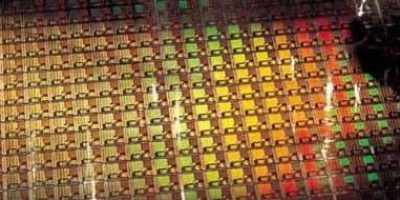
The CoWoS interposer is over 1,000 square mm and contains over 170,000 microbumps. The design has successfully passed test bring-up and is in final qualification, reports eSilicon. Four-high and eight-high HBM stack versions are in qualification. This design is in the industry vanguard of ASICs targeting deep learning applications, says eSilicon.

The 2.5D/HBM2 single package implementation gives the ASIC advantages such as orders of magnitude higher total bandwidth in a much smaller board footprint. Another benefit, says eSilicon, is that it affords highly parallel connections to memory stacks inside the package for fast access and a “significant” reduction in power consumption.

“This design greatly expands the possibilities for deep learning, and we are delighted to enter final qualification,” said Ajay Lalwani, vice president, global manufacturing operations at eSilicon. “TSMC’s 2.5D CoWoS packaging technology has been a key differentiater for this advanced design.”

As well as complex FinFET-class ASICs, custom IP and advanced 2.5D packaging solutions, eSilicon provides complete 2.5D/HBM2 and TCAM platforms for FinFET technology at 14,16 and 17nm as well as SerDes, specialised memory compilers and I/O libraries. It has a patented knowledge base and optimisation technology that it provides to customers serving the high-bandwidth networking, high-performance computing, artificial intelligence and 5G infrastructure markets.

This news story is brought to you by softei.com, the specialist site dedicated to delivering information about what’s new in the electronics industry, with daily news updates, new products and industry news.

To stay up-to-date, register to receive our weekly newsletters and keep informed of the latest technology news and new products from around the globe. Simply click this link to register here:  softei.com

Readers can also register to receive the monthly newsletter from our sister site, weartechdesign.com. This is the only website dedicated to developers of wearable electronic products. Simply click this link to register: weartechdesign.com

We have a Fitbit to give away on both Softei.com and Weartechdesign.com! Register today to enter the competition to win a Fitbit at softei.com or weartechdesign.com.

Picture credit – TSMC foundry

www.esilicon.com

> Read More

Multi-phase PMICs offer efficiency in “smallest” footprint, says Renesas Electronics

Three power management ICs (PMICs) from Renesas Electronics are claimed to offer the highest power efficiency and smallest footprint for application processors in smartphones and tablets. The ISL91302B, ISL91301A, and ISL91301B multi-phase PMICs also deliver power to artificial intelligence (AI) processors, FPGAs, and industrial microprocessors, and can power the supply rails in solid state drives (SSDs), optical transceivers, and a range of consumer, industrial and networking devices.

The ISL91302B dual/single output, multi-phase PMIC provides up to 20A of output current and 94 per cent peak efficiency in a 70mm2 package that is more than 40 per cent smaller than competitive PMICs, says Renesas.

The ISL91301A triple output PMIC and ISL91301B quad output PMIC deliver up to 16A of output power with 94 per cent peak efficiency. The programmable PMICs leverage Renesas’ R5 Modulation Technology to provide fast single-cycle transient response, digitally tuned compensation, and high 6.0MHz (maximum) switching frequency during load transients. Power supply designers can design boards with 2.0 x 2.0mm, 1.0mm low profile inductors, small capacitors, and only a few passive components.

Renesas PMICs do not require external compensation components or external dividers to set operating conditions. Each PMIC dynamically changes the number of active phases for optimum efficiency at all output currents. Their low quiescent current, light load efficiency, regulation accuracy, and fast dynamic response extend battery life for mobile devices.

The ISL91302B PMIC is available in three factory configurable options for one or two output rails. The dual-phase configuration supports 10A from each output, the triple-phase configuration supports 15A from one output and 5.0A from the second output and the quad-phase configuration supports 20A from one output. Input supply voltage range is 2.5 to 5.5V with I2C or SPI programmable Vout from 0.3 to 2.0V. The PMIC provides 75-microA quiescent current in discontinuous current mode (DCM). Integrated telemetry ADC senses phase currents, output current, input/output voltages, and die temperature, enable PMIC diagnostics during operation. Protection features include soft-start and fault protection against under-voltage, over-voltage, over-current, over-temperature and short circuit conditions.

The ISL91301A and ISL91301B PMICs are available in two factory-configurable options. The ISL91301A is a dual-phase, three output rail device, configured as 2+1+1 phase. The ISL91301B is a single-phase, four output rail device, configured as 1+1+1+1 phase. Current is 4.0A per phase for 2.8 to 5.5V supply voltage and 3.0A per phase for 2.5 to 5.5V supply voltage. The PMICs have I2C or SPI programmable Vout from 0.3 to 2.0V to provide 62-microA quiescent current in discontinuous current mode. Renesas reports ±0.7 per cent system accuracy for -10 to +85 degree C with remote voltage sensing. The ISL91301A and ISL91301B PMICs have soft-start and fault protection against under-voltage, over-voltage, over-current, over-temperature and short circuit conditions.

The ISL91302B PMIC is available now in a 2.551 x 3.670mm, 54-ball WLCSP package. The ISL91301A triple-output PMIC and ISL91301B quad-output PMIC are available now in 2.551 x 2.87mm, 42-ball WLCSP packages.

http://www.intersil.com/products

> Read More

Static var generator boosts energy efficiency and ensures load balancing

For industrial grids and large commercial buildings, TDK has developed the Epcos PQvar, modular static var generator for active, stepless power factor correction and load balancing.

It has a fast response time of less than 15 milliseconds and a dynamic reaction time of 50 micro seconds and offers significantly faster compensation than conventional systems, claims TDK. The Epcos PQvar is suitable for the active compensation of both inductive and capacitive loads and can achieve a power factor of 0.99. At the low-voltage level PQvar is designed for 400 and 690V supply systems. In these voltage classes, individual modules with outputs of between 30 and 200kvar are available, as well as systems for up to 880kvar per compensation cabinet.

The targeted use of power factor correction systems can significantly improve energy efficiency as the power losses in the electrical transmission and distribution network are significantly reduced and, the CO2 emissions for generating wasted power are avoided. Transformers and the power transmission and distribution networks can be used more efficiently, says TDK.

Using advanced multi controllers (AMC), the PQvar system can be combined with conventional passive low-voltage compensation stages. The medium-voltage level is covered by systems for 6.0, 10 and 35kV. The modules are designed for outputs of between 2000 and 12,000kvar. All modules are available for three-phase grids with or without neutral conductors. Depending on the output and size, the modules are designed as slide-in units for control cabinets and systems for wall mounting (low-voltage) or as control cabinet systems (medium-voltage).

TDK is an electronics company based in Tokyo, Japan. It was established in 1935 to commercialise ferrite, a key material in electronic and magnetic products. TDK’s portfolio includes passive components, such as ceramic, aluminum electrolytic and film capacitors, ferrites and inductors, high-frequency products, and piezo and protection components, as well as sensors and sensor systems and power supplies. These products are marketed under the product brands TDK, Epcos, InvenSense, Micronas, Tronics and TDK-Lambda. Further main product groups include magnetic application products, energy devices, and flash memory application devices. TDK focuses on information and communication technology and automotive, industrial and consumer electronics.

http://www.global.tdk.com

> Read More

Pace 2 DPI engine secures networks says Rohde & Schwarz

Deep packet inspection (DPI) technology addresses a range of network security challenges including malware and non-malware threats. At the RSA Conference in San Francisco, Rohde & Schwarz demonstrates what it claims is the highest performing DPI software on the market.

Available from ipoque, a Rohde & Schwarz company, the scalable, and customisable turnkey DPI software secures network and protects organisations against cyber attacks. For network security vendors, the R&S PACE 2 DPI engine from Rohde & Schwarz delivers network visibility. Incorporating DPI adds IP traffic analytics capabilities to network security devices and provides granular information on applications and protocols for proper classification.

R&S PACE 2 classifies thousands of applications and protocols, provides content and metadata extraction regardless of whether the protocols use advanced obfuscation, port hopping techniques or encryption, and offers metrics and heuristics from IP traffic in real time. When applied to network security solutions, developers can achieve reliable application visibility, says Rohde &Schwarz, adding that it allows for facilitating the secure delivery of critical applications and services.

R&S Pace2 DPI software is used by Saint Security in its network-based advanced malware response solution MNX to identify, analyse, judge and block malicious activity. The R&S Pace 2 engine extracts file content and metadata to identify potentially dangerous executables caused by advanced persistent threats (APTs). By embedding the DPI engine, Saint Security unlocks the full potential of artificial intelligence (AI)-based analysis methodologies to fingerprint cyber attacks.

The DPI software by Rohde & Schwarz will be presented at this year’s RSA Conference in San Francisco at booth 3927/16, April 16–20, 2018.

Ipoque is a Rohde & Schwarz company, providing deep packet inspection software that adds protocol and application classification capabilities to network analytics, traffic management and cybersecurity solutions. ipoque also provides a holistic network traffic analytics system for communication service providers that delivers deep insight into network behaviour, network performance and trends to optimize quality of experience and service.

The Rohde & Schwarz technology group develops, produces and markets innovative information and communications technology products for professional users. Rohde & Schwarz focuses on test and measurement, broadcast and media, cybersecurity, secure communications and monitoring and network testing, areas that address many different industry and government-sector market segments.

http://www.rohde-schwarz.com

> Read More

About Smart Cities

This news story is brought to you by smartcitieselectronics.com, the specialist site dedicated to delivering information about what’s new in the Smart City Electronics industry, with daily news updates, new products and industry news. To stay up-to-date, register to receive our weekly newsletters and keep yourself informed on the latest technology news and new products from around the globe. Simply click this link to register here: Smart Cities Registration