


Microchip expands PolarFire FPGA smart embedded video ecosystem

Microchip has expanded its PolarFire FPGA smart embedded video ecosystem to support developers who need reliable, low-power, high-bandwidth video connectivity. The embedded vision solution stacks combine hardware evaluation kits, development tools, IP cores and reference designs to help streamline development, strengthen security and accelerate time to market. The stacks include Serial Digital Interface (SDI) Receive (Rx) and Transmit (Tx) IP cores and a quad CoaXPress (CXP) board to support complete video pipelines for applications ranging from medical diagnostics and low-latency imaging to real-time camera connectivity for intelligent systems.

Microchip is currently the only known FPGA provider offering a quad CoaXPress FPGA-based solution, enabling direct SLVS-EC (up to 5 Gbps/lane) and CoaXPress 2.0 (up to 12.5 Gbps/lane) bridging without the need for third-party IP. SDI Rx/Tx IP cores deliver Society of Motion Picture and Television Engineers (SMPTE) compliant 1.5G, 3G, 6G and 12G-SDI video transport for broadcast and embedded imaging applications. Additionally, the ecosystem includes HDMI-to-SDI and SDI-to-HDMI bridging capabilities, supporting 4K and 8K video formats to enable high-resolution, high-bandwidth video transport across a range of professional and embedded applications.

By harnessing the ultra-low-power, secure, programmable, non-volatile architecture of PolarFire FPGAs, Microchip delivers integrated solution stacks that enable OEMs to create compact, fanless and high-performance video systems. The solutions are designed to help lower bill of material (BOM) costs, streamline design complexity and incorporate layered security across hardware, design and data using advanced anti-tamper protection and embedded security features.

“Next-generation medical, industrial and robotic vision systems demand not only exceptional video quality but also uncompromising energy efficiency,” said Shakeel Peera, vice president of marketing for Microchip’s FPGA business unit. “The expansion of our PolarFire FPGA embedded video ecosystem underscores our commitment to delivering low-power solutions that are designed to enable customers to develop reliable and high-performance systems with robust connectivity and minimised energy consumption.”
microchip.com

> Read More

Senseair launches next-generation CO2 sensor featuring 75% smaller size

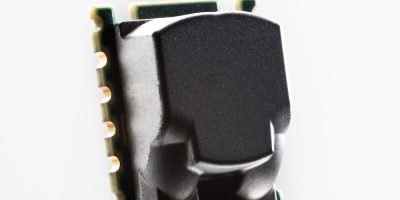
Senseair has developed the “S12 CO2” as a next-generation CO2 sensor for demand-controlled ventilation (DCV) in zero-energy buildings and battery-powered indoor air quality (IAQ) monitoring. The new model is approximately 75% smaller in volume than its predecessors and can be used as a surface-mount device (SMD) on circuit boards while maintaining high accuracy and low power consumption. This enables sensor integration in applications where installation was previously difficult. Senseair has already begun sample distribution and plans to initiate mass production in 2026.

In recent years, legal frameworks to enhance the energy efficiency of buildings have become stricter worldwide. Particularly within the EU, the Energy Performance of Buildings Directive adopted in 2024 requires new buildings to comply with the zero-emission standard. These buildings have very low energy needs, which are largely covered by onsite and nearby renewable energy sources. This legislation will come into effect for new public buildings by 2028 and for all other new buildings by 2030.

To contribute to achieving this zero-emission level for buildings, intelligent DCV systems are emerging as a highly effective alternative to conventional temperature-controlled ventilation. DCV systems automatically adjust the ventilation based on CO2 levels, thus enabling both reduction in energy consumption and comfortable IAQ. However, DCV systems require the installation of CO2 sensors across the entire building, and constraints in design and installation space have so far proved to be major challenges.

Senseair’s new “S12 CO2” sensor features a redesigned structure based on the company’s NDIR (non-dispersive infrared absorption) sensor technology. With a measurement range of 400 – 10,000 ppm and an accuracy of +/- (30 ppm + 3% of reading), the new sensor maintains the performance of its predecessor CO2 sensors, “Sunrise” and “Sunlight,” but comes with a significantly smaller packaging size of 18 mm × 15 mm × 7 mm. This compact size enables the effective use of available space. It enables SMD reflow surface mounting on circuit boards, offering a discreet and elegant installation in air conditioning equipment or wall-mounted monitors without compromising design aesthetics.

For the retrofit market, where cable installation is often challenging, the Senseair “S12 CO2” sensor offers the same ultra-low power consumption as the “Sunrise” and “Sunlight” sensors. Its energy efficiency, SMD-solderable design, and compact size enable battery-powered CO2 monitors that allow easy installation with a wide degree of freedom.

The “S12 CO2” sensor will be deployed for IAQ monitoring in building energy management systems (BEMS) within office buildings and commercial facilities, primarily in Europe, North America, and Asia. Further application fields include air conditioning units and heat exchangers in the residential sector.

Like its predecessors, the “S12 CO2” sensor will comply with globally recognised standards, including ANSI/ASHRAE Standard 62.1-2022 Addendum d, RESET Grade B, and WELL Building Standard® (WELL v2TM), ensuring worldwide relevance and impact.

www.akm.com

> Read More

Infineon introduces the industry’s first Wi-Fi 7 IoT 20 MHz tri-radio device optimised for IoT

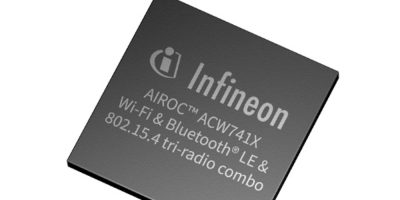
To support continued growth of connected devices in home, industrial and commercial markets, Infineon has introduced the AIROC ACW741x, a new product family that integrates a tri-radio with Wi-Fi 7, Bluetooth LE 6.0 with Channel Sounding, and IEEE 802.15.4 Thread, with Matter ecosystem support in a single device. This product family introduces the industry’s first 20 MHz Wi-Fi 7 device for IoT, provides Wi-Fi 7 Multi-Link for IoT for enhanced robustness in congested environments and has the industry’s lowest Wi-Fi connected standby power.

With the IoT connectivity market projected to reach 30 billion devices by 2030 [1], IoT device manufacturers continue to demand reliable, energy-efficient and cost-effective solutions. The Wi-Fi Alliance is introducing the 20 MHz device category for Wi-Fi 7 aimed at addressing the needs of the broader IoT ecosystem, and the AIROC ACW741x is the industry’s first product to support 20 MHz-only channels, with optimised radio performance and ultra-low power consumption.

As Wi‑Fi–connected IoT devices proliferate across homes and commercial environments, spectrum congestion and interference increasingly undermine wireless connectivity and performance. With Wi‑Fi 7 Multi‑Link for IoT, the ACW741x boosts link reliability with Adaptive Band Switching to mitigate congestion and interference. By maintaining concurrent links across 2.4, 5, and 6 GHz, Wi‑Fi 7 Multi‑Link for IoT delivers a more consistent, always‑connected experience for applications such as security cameras, video doorbells, alarm systems, medical devices, and HVAC systems.

The Infineon ACW741x product family has an optimised 20 MHz design to achieve the industry’s lowest power consumption, and is ideal for battery-operated applications such as security cameras, door locks, and thermostats that require ultra-low Wi-Fi connected standby power. Compared to other IoT Wi-Fi products on the market, the ACW741x offers up to 15x lower standby power consumption, which delivers significantly longer battery life.

The ACW741x also integrates wireless sensing capabilities, which adds contextual awareness to smart IoT devices to create differentiated offerings such as home automation and personalisation. Wi-Fi Channel State Information (CSI) 802.11bf enables enhanced Wi-Fi sensing with intelligence sharing between same-network devices, whereas Channel Sounding delivers accurate, secure, low-power ranging with centimeter-level accuracy.

Combining extensive on-chip integration—including transmit/receive switches, power amplifiers, low-noise amplifiers, power management, and a low-power oscillator—with a QFN package that enables low-cost two-layer PCB designs, the ACW741x provides a cost-efficient migration path to Wi‑Fi 7.

https://www.infineon.com/promo/acw741x.

> Read More

Digid announces its nanoscale temperature and force sensors are ready for mass deployment

Digid has announced that its patented printed electronics fabrication technology has been fully qualified for volume production of temperature and force sensors as small as 1µm long.

Digid sensors are believed to be the world’s smallest – and are set to become even smaller: Digid’s technology roadmap forecasts future production of sensors that are just 10nm long.

This nanoscale sensing technology provides the key that will unlock the potential of multiple emerging markets, including physical AI and humanoid robots. In robotics, for instance, Moravec’s paradox – that robots struggle with tasks which humans find easy, such as handling a delicate wine glass – has persisted in part because robot hands lack the billions of nerve endings on a human finger.

Now Digid offers the opportunity for machines to mimic human sensory capabilities: its nanoscale printed sensors can be applied to surfaces such as a robot’s shell in arrays of up to 16 x 16 sensors.
Other applications for Digid sensors include:
Force sensing on the blade of a scalpel in robotic surgical equipment
Temperature sensing on the tip of a temperature probe used in minimally invasive surgery
Temperature sensors embedded inside battery cells, for safety and performance monitoring
Biosensors for detecting biological objects such as viruses, or the chemical markers of drugs in the bloodstream

Dr Konstantin Kloppstech, Chief Technology Officer of Digid, said: ‘With the start of mass production of Digid sensors, the opportunities to embed sensing on almost any surface or in almost any device have become limitless. Our sensor is so small that it cannot be seen with the naked eye. Now it is up to the imaginations of design engineers to dream of uses for sensing where sensing has never before been possible.’

For each design project, Digid supplies a custom sensor and sensor assembly backed by hardware and software integration support. The sensor provides either a voltage or resistance measurement output via an I2C interface. Digid signal processing software converts the raw measurement outputs to useful temperature or force data.

digid.com

> Read More

About Smart Cities

This news story is brought to you by smartcitieselectronics.com, the specialist site dedicated to delivering information about what’s new in the Smart City Electronics industry, with daily news updates, new products and industry news. To stay up-to-date, register to receive our weekly newsletters and keep yourself informed on the latest technology news and new products from around the globe. Simply click this link to register here: Smart Cities Registration