

Infineon advances Physical AI security against quantum-era threats
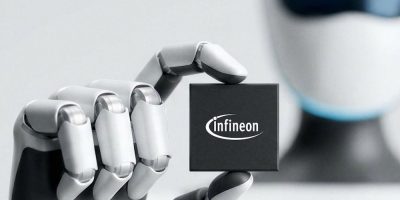
Infineon has announced the integration of its OPTIGA Trusted Platform Module (TPM) SLB 9672 with NVIDIA’s Jetson Thor platform. The hardware-based security solution securely stores cryptographic keys and verifies system integrity at the chip level, establishing a certified, quantum-resilient root of trust for Physical AI systems. The integration strengthens the security foundation, enabling robots and autonomous systems to operate securely and reliably across their full lifecycle. As these systems move from controlled environments into factories and public spaces, the impact of a security failure extends beyond data loss to operational disruption and regulatory liability. For the robotics industry, the security architecture decisions made at design-in have lasting commercial and compliance implications.
The EU Cyber Resilience Act, EU AI Act, IEC 62443 for industrial systems, and sector-specific standards in healthcare and automotive environments are working towards the new requirements of demonstrable, auditable security at the hardware level, creating a compliance-driven demand signal that Infineon and NVIDIA are positioned to serve.
The OPTIGA TPM technology provides a physically isolated, FIPS and Common Criteria certified solution that is separate from the application processor. It delivers measured boot and remote attestation, allowing operators and regulators to cryptographically verify at any point in a system’s operational life that its software stack is genuine and unmodified. It also provides hardware-protected storage for proprietary AI model keys, encrypted communications, and cryptographically signed over-the-air updates.
The OPTIGA TPM, the industry’s first TPM protected by a post-quantum secured firmware update mechanism, is designed as a root of trust which is protected from being compromised as the cryptographic threat landscape evolves. Developers building Physical AI applications on NVIDIA’s Jetson Thor platform can rely on the hardware security foundation established at the architecture stage and will remain protected against current and upcoming cryptographic threats on robot systems.
The roadmap to full post-quantum security is completed by Infineon’s next-generation OPTIGA TPM, embedding algorithms including ML-KEM and ML-DSA, standardized by the US National Institute of Standards and Technology (NIST) in 2024. Companies building on the current OPTIGA TPM today will be able to make an easy transition. For the robotics industry, this matters beyond technical readiness. Regulatory frameworks governing Physical AI are already moving in the direction of mandatory PQC compliance, and the architecture decision made at the outset determines whether a deployed robot fleet can meet those requirements across its full deployment period or faces costly hardware intervention when mandates arrive.
Humanoid robots rely on a chain of semiconductor functions to sense, think and act safely and securely, spanning sensing, actuation, power management, connectivity and security. Infineon addresses all these functional blocks through a broad portfolio of dedicated solutions, with an estimated semiconductor content of approximately USD 500 per humanoid robot. Security isn’t optional; it’s the foundation of modern robotics.