

Infineon accelerates deployment of safe and secure robots using digital twins in collaboration with NVIDIA
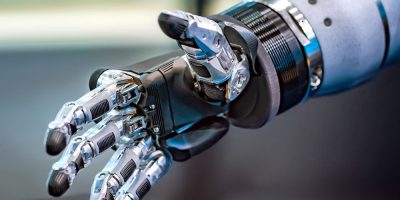
Infineon has announced the expansion of its collaboration with NVIDIA to advance system architectures for Physical AI, with a focus on humanoid robots. Building on the collaboration announced in August 2025, the companies intend to combine Infineon’s strengths in motor control, microcontrollers, power systems and security with NVIDIA’s AI, robotics and simulation platforms to help the ecosystem design and deploy humanoid robots. Infineon will also join NVIDIA Halos AI Systems Inspection Lab to examine the design of robust hardware and software safety foundations, ensuring that robots can operate safely and securely in real-world environments.
Humanoid robots are complex systems that must perceive their surroundings, make decisions in real time and act safely – often in workplaces designed for humans. To enable this, they rely on a chain of semiconductor-based functions: sensing, processing, actuation, connectivity and energy management. Infineon is bringing its semiconductor solutions to NVIDIA’s simulation and robotics platforms to accelerate this chain of sensing, thinking, and acting safely and securely so that humanoid robots can move more quickly from lab pilots into deployment at scale.
A key element of the collaboration is the use of digital twins of Infineon’s smart actuators and selected sensors. These virtual models are deployed in NVIDIA Isaac Sim and NVIDIA Isaac Lab, open robotic learning and simulation frameworks, so developers can test and finetune robot motion control and perception in realistic simulation before hardware is built or integrated. By identifying and resolving issues earlier in the development cycle, customers can shorten time‑to‑market and reduce integration risk for humanoids used in applications such as logistics, manufacturing and service robotics.
Building on their existing collaboration, Infineon and NVIDIA will work on a common system architecture for humanoid robots that delivers ultra‑low latency, compact form factors and high-power density. Infineon will provide motor‑control solutions powered by NVIDIA Holoscan Sensor Bridge that interface with NVIDIA Jetson Thor developer platform, using Infineon AURIX microcontrollers and PSOC devices and supporting post‑quantum cryptography (PQC) for firmware and system protection.
Security is a key part of the collaboration. NVIDIA Jetson Thor pairs a compact compute module with a carrier board that provides power and interfaces to sensors, networking, and actuators. Infineon will provide hardware TPM (Trusted Platform Module) chips and other security components as reference designs to protect AI models and data and secure the system from NVIDIA Jetson module all the way to the cloud. The collaboration will also focus on Halos safety framework, enabling the design of certifiable systems for Level 4 autonomous vehicles and robotics. Infineon will provide hardware and software safety foundations, integrating hardware platforms and operating systems to ensure rigorous safety and systematic cybersecurity by design across the entire stack. This helps companies designing Jetson carrier boards build in stronger security, including secure boot, encrypted communications, and safe over-the-air updates.